I’m probably setting myself up for a fall by writing this article. For decades, LGBTQ+ representation in fiction was nearly non-existent or relegated to tragic side stories. We tended to wither away, sustained only by unrequited love and stricken by croup. In recent years, the publishing industry has made progress. Most bookshops now boast LGBTQ+ table displays.
Despite this, one recurring pattern remains: the vast majority of LGBTQ+ books center on romance. While love stories are important, the LGBTQ+ experience is far more than just copping off and/or living (un)happily ever after.
As a reader who also writes, I’m in the market for more queer stories that explore friendship, adventure, identity, family, ambition, and self-discovery—stories where being LGBTQ+ is just one part of a fully realised life.
Sex sells
It is a truth universally acknowledged, that a single man in possession of a smoking hot bod, must be in search of another man, single or otherwise. A matching smoking hot bod is usually non-negotiable.
Take a browse through LGBTQ+ book lists from major publishers and most books fall into three categories. Contemporary rom (often with com) – Red, White & Royal Blue by Casey McQuiston, The Charm Offensive by Alison Cochrun. Coming-of-age romances – Heartstopper by Alice Oseman, Felix Ever After by Kacen Callender. And tragic star-crossed tales of love – The Song of Achilles by Madeline Miller, They Both Die at the End by Adam Silvera.
I’m no snob. I don’t have a swinging brick where my heart should beat. I’ve read pretty much all of these and loved them. When I started out writing, my motto was ‘rom with com’. But – and this is where I might lose your goodwill – these great bestselling books tend to reinforce the idea that all LGBTQ+ stories must centre around finding love.
LGBTQ+ people exist in every kind of story—not just romances. While romance will always top TBR (to-be-read) lists, there is a significant gap in books that let queer characters explore other facets of life.
In a 2023 interview with The Guardian, author Torrey Peters (Detransition, Baby) pointed out the need for more variety in queer storytelling:
“I want to see more trans stories about ambition, success, failure—stories that aren’t just about coming out or romance. We deserve narratives that show the full spectrum of our lives.”
More than just the love interest
LGBTQ+ people should be able to read a book and see ourselves as heroes in fantasy epics – and not have our ability to crash diet for a party turned into a superpower. We should be the investigative journalist who uncovers political corruption in a hard-nosed thriller. And maybe, just maybe, we could avoid having a quick fumble with the bad boys. We could be the scientist on a space mission, or the messy, complicated Lord or Lady of the Manor, struggling to make ends meet before having the gardener shot.
There is growing demand for stories that put LGBTQ+ characters front and centre without making their sexuality or gender identity the sole focus. As bestselling fantasy author V.E. Schwab (The Invisible Life of Addie LaRue) put it in a 2022 New York Times interview:
“I don’t write about queerness as a conflict. I write queer characters who have agency, who exist in worlds where they are not defined solely by their identity. That’s the kind of representation I want to see more of.”
Readers deserve complex, fully realised LGBTQ+ characters who go on adventures, solve crimes, build careers, and experience personal growth—without who they take to bed being the main source of drama.
The growing demand
The success of books that do just this proves there’s an appetite for broader representation.
‘Cemetery Boys’ by Aiden Thomas is a paranormal fantasy novel about a trans boy trying to prove himself to his family. Dean Atta’s ‘The Black Flamingo’ is a coming-of-age story about self-identity and creativity, with poetry at its heart. Travis Baldree created a lesbian with coffee shop ownership dreams in ‘Legends and Lattes’. With ‘Light from uncommon stars’ Ryka Aoki created a genre-blending novel about a trans violinist, a cursed mentor, and an intergalactic refugee.
Why it matters
I get that ‘romance’ is a top-selling genre. But it’s not quite as popular as ‘crime’. Not every reader wants to consume endless love stories. More importantly, LGBTQ+ people need to see all aspects of their lives reflected in literature.
In a 2023 essay for Electric Literature, author Charlie Jane Anders (The City in the Middle of the Night) argued:
“We’ve fought for queer characters to exist in books. Now we need them to do more than fall in love.”
That’s the future of LGBTQ+ fiction: a world where queer characters are astronauts, detectives, warriors, and business moguls—where their queerness is present but not the only thing that defines them.
Pushing for change
Even just a few years ago, most mainstream publishers refused to have anything to do with ‘queer books’. That’s changed. And I’m genuinely grateful not to find my novels hidden away on a dusty shelf at the back of a side street shop where every purchase comes with a brown paper bag.
But more needs to change. The Big Six publishers need to expand their idea of what makes an LGBTQ+ book marketable. Many authors have found that if their book doesn’t fit with what is thought of as romance, it’s harder to get industry support.
Bestselling YA author David Levithan (Boy Meets Boy, Every Day) spoke about this challenge in a 2022 Publishers Weekly panel:
“Publishing is still catching up. There’s a belief that LGBTQ+ stories need to be romance-first to sell, but that’s not what readers want anymore. The demand for diverse stories is huge—we just need the industry to take more risks.”
LGBTQ+ representation in fiction has come a long way, but there’s still work to do. It’s time to normalise queer characters in every genre, in every kind of story—not just love stories.
We need LGBTQ+ books that feel as varied, exciting, and unpredictable as the lives of real queer people. Stories that show us navigating careers, solving mysteries, surviving in dystopian worlds, dealing with the death of our partners, leading revolutions… just simply existing without being defined by what we do in bed.
Because at the end of the day, queer stories are human stories. And those stories should be limitless.
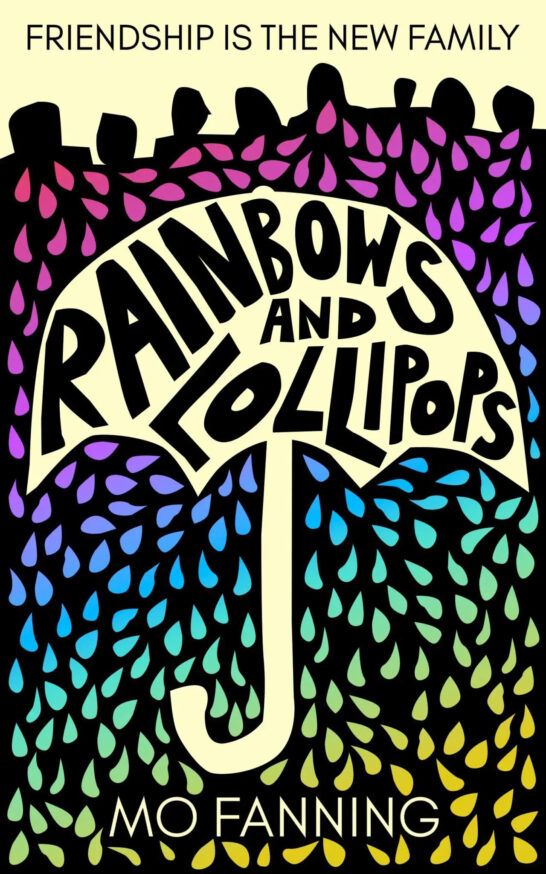
Mo Fanning is the author of Rainbows and Lollipops (Spring Street Books, £12.99). www.mofanning.co.uk