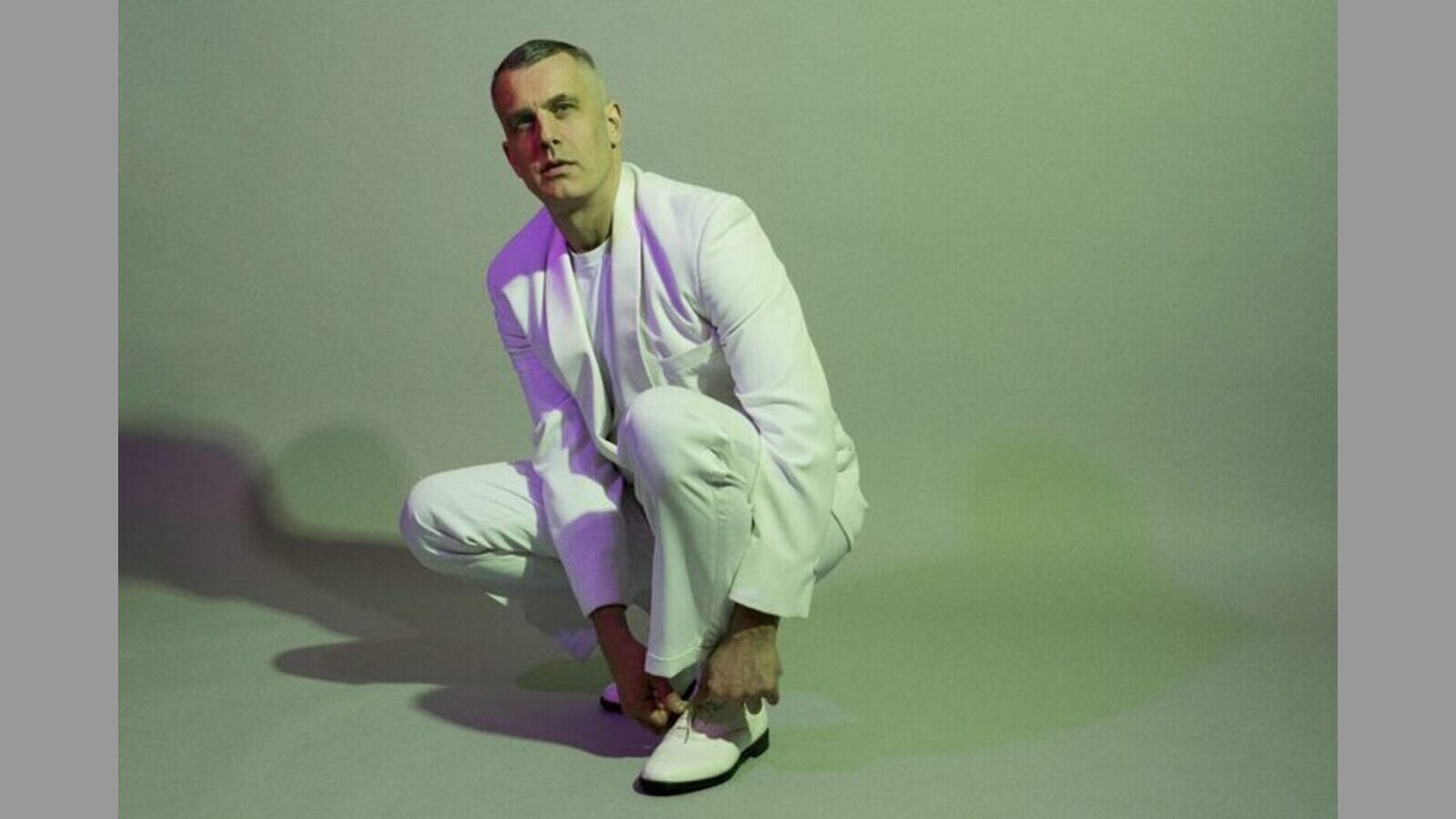
Released last September, The Hidden Cameras’ album Bronto pushes the boundaries of pop. Joel Gibb, the visionary behind this legendary music project, dedicated this unconventional meta-dance-pop album to his adopted hometown of Berlin and collaborated with electronic heavyweights like the Pet Shop Boys and Vince Clarke.
Nightclubs have historically been central places of resistance and community in the history of gay liberation and self-empowerment. Bronto explores the dazzling facets of this history in its own unique way, paying tribute to pioneers while earning its place among them.
“Like the music of the Pet Shop Boys The Hidden Cameras’ songs balance between euphoria and (at times dark) melancholy”
Rolling Stone
For the past 25 years, few have translated the topic of gay love into music as originally as Joel Gibb, the mastermind behind The Hidden Cameras. Founded in Toronto in 2001, the collaborative project broke the boundaries of the traditional band formation with its fluid member structure. With his “gay folk church music,” Gibb has sung about homoerotic love on stages and in church halls long before those themes became mainstream in pop music.
With his seventh studio album, Bronto, Joel Gibb follows in the footsteps of pioneers like Lou Reed and David Bowie. He has created an album inspired by Berlin but mostly recorded in his second adopted home, Munich. Having lived in Berlin for over 15 years, Gibb’s sound has undoubtedly been influenced by this vibrant city. After experimenting with folk and country, he worked with Munich-based collaborator Nicolas Sierig (Joasihno) to develop Bronto, an unconventional electronic meta-dance-pop album.
The new video for You Can Call, shot at Berlin’s Theatre des Westens, sees Gibb envisioning himself on the LED-flashing television stage of the Eurovision Song Contest—another aspect of gay culture that he initially had to acclimate to in Berlin. With this unofficial application song, Gibb could help rescue the German Eurovision team—who wouldn’t support this one?
Ultimately, Bronto serves as a decade-spanning time capsule, allowing Gibb to enter a dialogue with his younger self and reflect on the roots of The Hidden Cameras nearly 25 years later.