Queer East will showcase cinema and performing arts at various venues throughout London. Over the course of five weeks, Queer East will feature films, short films, documentaries, and moving image works that explore the ever-evolving queer landscape of East and Southeast Asia.
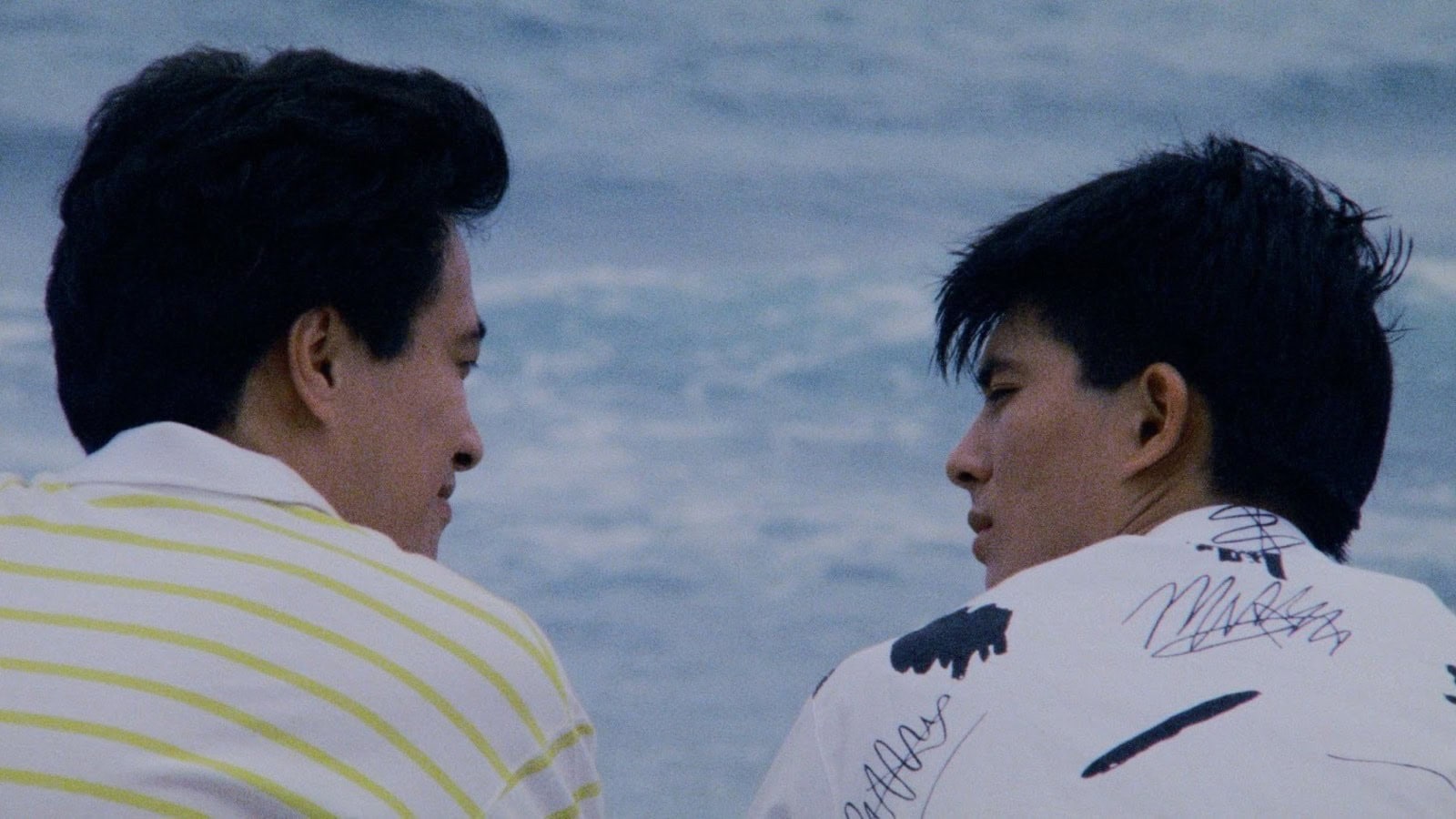
The festival will begin on May 1 at the Barbican with the UK premiere of the landmark 4K restoration of The Outsiders (孽子), directed by Yu Kan-Ping and released in Taiwan in 1986. This film is the first screen adaptation of Pai Hsien-Yung’s groundbreaking novel Crystal Boys. The restoration brings back previously censored material, allowing the film to be viewed in its full, hallucinatory glory.
This year’s programme includes screenings at various venues such as the Barbican Centre, BFI Southbank, Centre 151, Genesis Cinema, ICA, Rich Mix, Rio Cinema, The Garden Cinema, Museum of the Home, UCL East Community Cinema, and more. It features a diverse selection of fiction and documentary films, classic restorations, and UK premieres, showcasing both features and shorts from Asia and its diaspora communities. Notably, there will be two rare screenings in 35mm format.
“To look back is a crucial step in understanding how to move forward. This year’s programme places a strong focus on queer cinema heritage, featuring a series of screenings with 35mm prints, stunning 4K restorations, and rare archival materials spanning over six decades of queer filmmaking across Asia. While sometimes overlooked, these films hold the collective memory of our communities, and by bringing them to the big screen again, we want to create a space for dialogues between our queer past and today’s audiences.”
Yi Wang, Queer East Festival and Programme Director
Highlights of the Queer East 2026 programme include:
The Outsiders (孽子) – Opening Night – a stunning 4K restoration of Yu Kan-Ping’s groundbreaking Taiwanese queer drama
3670 – a milestone in South Korean queer cinema portraying the hidden codes of Seoul’s gay scene
A Useful Ghost (ผีใช้ได้ค่ะ) – a wildly camp debut feature from Thailand, skewering the establishment and cultural hypocrisy
Montreal, My Beautiful – screen icon Joan Chen heads this landmark queer Asian diaspora film
Between Goodbyes – UK premiere of a poignant documentary about queer adoption and the legacy of Korea’s overseas adoption programme
Cactus Pears (साबर बोंडं) – from the Beyond Strand, winner of the World Cinema Grand Jury Prize at Sundance 2025
A Good Child (好孩子) – UK premiere; a hilariously funny and profoundly moving drag comedy from Singapore
Johanna d’Arc of Mongolia – the resplendent 1989 classic by lesbian cinema pioneer Ulrike Ottinger, screening with a curator introduction and artist discussion
The features programme showcases UK premieres and new releases from 2025
Joonho Park’s 3670 (2025) follows Cheol-jun, a young North Korean defector in Seoul who is forced to hide his gay identity. He discovers the city’s vibrant gay scene and the behavioural codes that sustain it.
The UK premiere of Tracy Choi’s romantic film Girlfriends (女孩不平凡, 2025) is set in Macau, Hong Kong, and Taiwan, where 34-year-old filmmaker Lok revisits past moments to explore what it means to be true to oneself.
Nigel Santos’ film Open Endings (2025) makes its UK premiere, showcasing four queer women, all ex-partners, as they navigate love, intimacy, and chosen families. This confident and self-aware film explores themes of loyalty and the liberating power of non-normative lifestyles.
Ong Kuo Sin’s A Good Child (好孩子, 2025) is making its UK premiere and hails from Singapore. The story revolves around a sassy drag queen who, despite his reluctance, returns home to care for his mother, who has dementia. Blending humour and deep emotional resonance, the film showcases a phenomenal lead performance by rising star Richie Koh.
The UK premiere of the documentary Between Goodbyes (2024), directed by Jota Mun, features the story of queer Korean adoptee Mieke and her birth mother, Okgyun. The film explores their journey to reconcile their painful pasts and examines the historical legacy of mass overseas adoption.
Queer as Punk (2024) follows Faris, a transgender man who is the lead singer of an openly queer Malaysian punk band. Alongside his bandmates, Yon and Yoyo, he uses their music to advocate for LGBTQ+ rights in a context of significant restrictions on human rights and freedom of expression.
Holo Wang’s UK premiere, A Drop in the Ocean (臨淵入魚, 2025), follows free-diving Taiwanese athletes Hua-Yang Huang and Afa Zhang and showcases mesmerising underwater cinematography.
Thunska Pansittivorakul’s film, Isan Odyssey (อีสานอำพราง, 2026), which is also a UK premiere, explores Mor Lam folk music and evolves into a powerful critique of state repression and political violence.
Tianyi Zheng’s hybrid documentary Where Comes Mulan (木蘭何處, 2026) is making its UK premiere. In this film, the filmmaker returns to her ancestral village, the fabled hometown of Mulan, and explores cultural mythology through a queer lens.
Queer East features showcase camp humour, horror, and political satire.
Ratchapoom Boonbunchachoke’s A Useful Ghost (ผีใช้ได้ค่ะ, 2025) is an extraordinary feature debut in which the son of a prominent manufacturing family discovers that his deceased wife has returned as a vacuum cleaner. This wildly camp attack on the Thai establishment, cultural hypocrisy, and political violence is plentiful with queer pleasures.
Fatrick Tabada’s UK premiere, Flower Girl (2025), hails from the Philippines and stars Sue Ramirez as a superficial sanitary towel endorser. After a supernatural encounter, she wakes up to discover that her vagina has vanished. This riotous comedy sharply critiques prejudices surrounding sex and gender identity.
Ryan Machado’s atmospheric film Raging (Rumaragasa, 2025) is making its UK premiere. Set in the mid-1990s on Sibuyan Island, Philippines, the film follows a young man who witnesses a mysterious plane crash. This event prompts him to confront his own trauma and raises difficult questions about queerness, abuse, and societal stigma.
Restorations feature heavily in the Queer East programme
The festival will feature the opening film alongside Lino Brocka’s Macho Dancer (1988, 4K restoration). This film follows Paul as he leaves his rural village to explore Manila’s red-light district. Its strikingly erotic imagery challenges viewers to reflect on their own desires and complicity.
Screening from a 35mm print, Masahiro Shinoda’s 1965 classic With Beauty and Sorrow (美しさと哀しみと) tells the story of a famous painter’s pupil and lesbian lover who vows to take revenge when her former abuser reappears. The film creates a claustrophobic atmosphere through its exquisite cinematography and the beautiful locations in Kyoto.
Another 35mm print from Japan, Keisuke Kinoshita’s achingly beautiful film Farewell to Spring (惜春鳥, 1959), follows five young men whose reunion in their hometown of Aizu leads to conflict and betrayal. The film provides a glimpse into what queer cinema might have looked like in 1950s Japan.
Classic cinema at Queer East
Classic cinema is represented by Li Youning’s The Spring Outside the Fence (竹籬笆外的春天, 1985), which traces the bond between two women growing up in a military dependents’ village in 1960s Taiwan, with Cherie Chung and Su Ming-Ming giving tremendously affecting performances.
Kim Hye-jung’s The Girl Princes (왕자가 된 소녀들, 2011) follows legendary actors of South Korea’s Female Gukgeuk tradition, a form of musical theatre popular in the 1950s in which women played male roles; the film scrutinises cultural tensions around gender performance and disguise.
Zhang Ying’s The Fantasy of Deer Warrior (大俠梅花鹿, 1961) is a whimsical Taiwanese film in which actors dress as forest animals, giving it an irresistible queer camp appeal.
Kashou Iizuka’s Blue Boy Trial (ブルーボーイ事件, 2025) is a compelling courtroom drama that highlights emerging trans talent. The story is based on real events that took place in Tokyo in 1965, when a doctor was put on trial for performing gender reassignment surgery, and his lawyer summoned trans women as witnesses.
And finally, powerhouse Asian cinema legend Joan Chen delivers a haunting performance in Xiaodan He’s Montreal, My Beautiful (2025), playing a Chinese immigrant mother who embarks on a journey of forbidden love and overdue self-discovery.
Beyond Queer East
The festival’s Beyond strand features works that expand its geographical perspective into a broader Asian context. Rohan Parashuram Kanawade’s award-winning debut, Cactus Pears (साबर बोंडं, 2025), boldly explores themes of grief and the liberating power of sexuality, set in rural western India. Ulrike Ottinger’s 1989 classic, Johanna d’Arc of Mongolia, follows two European anthropologists who are taken captive during a journey across the Mongolian steppe. They become entangled in a lesbian love triangle with their captor, the warrior princess Ulan Iga.
The strand also includes Plotholes and Detours, a collection of moving-image works from Turkey and its diasporas that examine how national narratives shift across different perspectives. Additionally, it features Tender Guerrillas, a program showcasing innovative short films from India that explore queer image-making through self-filming.
Queer East 2026 will showcase 17 Short Form Programs
Featuring over 90 short films from Asia and its diasporas, in addition to the feature films.
Pixelated Lesbian Mixtape: Azian Nurudin’s Wicked Times (1986-1999) delves into the archives of queer cinema, showcasing nine provocative videos by the boundary-pushing Malaysian-American artist. Additionally, Mari Terashima: Exquisite Tastes highlights the work of a prominent voice in Japan’s subcultural underground, featuring three of the artist’s films where violent tendencies intersect with refined manners. Furthermore, a mini-retrospective of the late Japanese filmmaker Hiroyuki Oki will take place as part of The Erotics of Space: Hiroyuki Oki.
The contemporary films in this strand move between animation, documentary, and experimental styles, showcasing a diverse range of queer storytelling. Highlights include Closed Mouths Don’t Get Fed, which uses food as a means of transgression, and BodyHacking, which explores male pregnancy and biopolitics. Other noteworthy films include CONG/SPIRACY, which employs camp, satire, and mythology as survival strategies in Southeast Asia, and Threads of Passage, which examines the textile industry and its global networks of labour and migration through a queer perspective.
As part of Queer East’s ongoing commitment to inclusive and open programming, many events in the Short Form and Beyond series have been curated by both emerging and established curators and collectives from diverse backgrounds across the UK and beyond. You can find the complete Short Form program, including dates and venues, at queereast.org.uk/festival-2026/.
Talks, workshops, industry and performances
Queer East not only features a film program but also offers a diverse lineup of events, including talks, workshops, and live performances. One of the highlights is Offline Memories, a series inspired by the Hong Kong LGBTQ+ Archive of Printed Matter. This series aims to illuminate the city’s queer culture before the Internet.
Pichet Klunchun’s two-decade research into the language of traditional Thai Khon dance culminates in his performance, No. 60, which innovates upon a legacy that has lasted 700 years. Meanwhile, at Battersea Arts Centre, the interactive performance Bunny employs rope bondage to explore themes of desire, trust, consent, and connection between the artist and the audience. On May 16, the Queer East Takeover at the ICA will present a full day of live performances and a late-night rave, featuring artists such as hua hua, Riven Ratanavanh, Unlock Dancing Plaza, and Princess Xixi.
The second Queer East Industry Day will take place at BFI Southbank on May 24, uniting film professionals to discuss challenges in queer and Asian independent film production and exhibition.
Instagram: @queereast
Bluesky: @queereast.org.uk





![The Rising in London's SE1 is an LGBTQ] bar that has many LGBTQ] social events](https://www.qxmagazine.com/wp-content/uploads/2024/09/imageedit_26_9160770370-728x410.jpg)