-
‘The Pedro Almodovar of dance’ Carlos Pons Guerra and DeNada Dance Theatre tour Mariposa: A Queer Tragedy
-
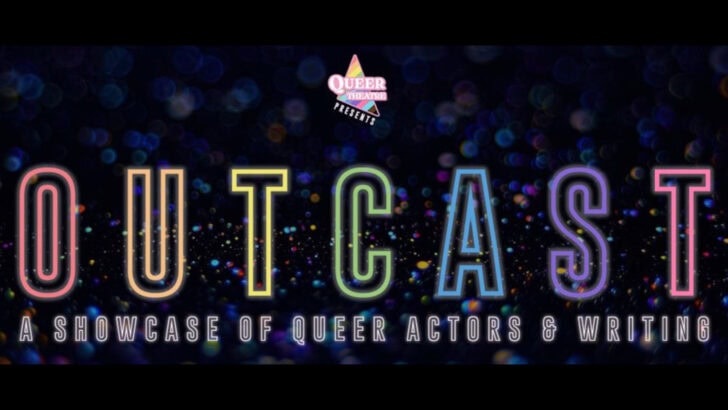
OutCast: Queer Theatre highlights queer talent in London through a new showcase
-
QX meets the creative minds behind Looking for fun?
-
Best pantomime and Christmas theatre shows in London 2024/25
-
Tales from a Little Laughing Lesbian at The Courtyard Theatre, 3 – 6 Dec ’24
-
The Simple Life and Death creators count down their Top 10 Paris Hilton Songs
-
Give or Take: A queer critique of what it means to give and to receive, 22 & 23 Nov ’24 at Stanley Arts
-
Stephen Fry announced as Patron to new LGBTQ+ Theatre Company
-
QX meets Amanda Schulz, the producer of The Mad Gay King
-
Preview: The Mad Gay King at King’s Head Theatre, 3 – 18 October 2024
-
Quentin Crisp meets Derek Jarman, 1 and 2 October ’24
-
Ben Whishaw stars in Samuel Beckett’s Waiting For Godot at Theatre Royal Haymarket to 14 Dec ’24
-
The Real Ones written by Waleed Akhtar at Bush Theatre, 6 Sep – 26 Oct ’24 (QX Discount Code)
-
Two Plant Gaysians at The Pleasance, 12 October 2024
-
Housemates Festival: Limp Wrist & The Iron Fist at Brixton House, 9 – 12 October ’24
-
Cock by Mike Bartlett opens at The Tower Theatre on 18 September ’24
queer theatre
Queer theatre has played a significant role in London’s cultural and theatrical history, with gay plays providing a platform for LGBTQ+ voices, challenging social conventions and exploring questions of sexuality, identity, discrimination and belonging. From underground performances to mainstream productions, queer theatre has developed into an important part of London’s artistic landscape, reflecting changing attitudes towards homosexuality and gender identity.
Queer theatre in London has long played an important role in challenging social conventions, celebrating LGBTQ+ identities and providing a platform for voices that have historically been marginalised. From underground performances to major theatrical productions, London’s queer theatre scene reflects the city’s diversity, creativity and ongoing struggles for equality and representation.
Historically, queer theatre developed in response to a society in which homosexuality was criminalised and LGBTQ+ identities were often excluded from mainstream culture. Theatre became a space for resistance, self-expression and community building. The relaxation of censorship laws in the 1960s and the decriminalisation of homosexuality in England and Wales in 1967 helped create greater opportunities for openly queer storytelling.
Groundbreaking Queer Theatre in London
Spitting Image (1968) – Colin Spencer
Pioneering British gay play. First performed at Hampstead Theatre Club in 1968, just one year after decriminalisation, this is widely recognised as Britain’s first openly gay play. It explored a relationship between two men and challenged contemporary attitudes towards homosexuality. Its success showed that audiences wanted to see gay lives represented openly on stage.
The Boys in the Band (1969) – Mart Crowley
Although American, its London production at Wyndham’s Theatre in February 1969 was an important theatrical event. Centred on a birthday party attended by a group of gay men, it explored friendship, internalised homophobia, relationships and gay identity. It brought openly gay characters to a mainstream West End audience.
Homosexual Acts (1975) – Gay Sweatshop
A landmark season at the Almost Free Theatre in Soho, it was the first season of gay plays in Britain. It helped establish Gay Sweatshop, one of Britain’s first professional gay and lesbian theatre companies. The company created opportunities for LGBTQ+ writers and performers to tell their own stories.
Passing By (1975) – Martin Sherman
Produced by Gay Sweatshop at the Almost Free Theatre, this tender love story between two men was significant because it presented gay relationships through affection, intimacy and ordinary human experience, rather than concentrating on persecution and tragedy. It featured a young Simon Callow.
As Time Goes By (1977) – Noel Greig and Drew Griffiths
Produced by Gay Sweatshop, this play traced gay history from the nineteenth century to the contemporary period. It was important in recovering gay historical figures and placing homosexuality within a wider social and political history.
Bent (1979) – Martin Sherman
Landmark queer history play. Premiering at the Royal Court Theatre in May 1979, Bent dramatised the persecution of gay men in Nazi Germany. Its central character, Max, experiences imprisonment and the brutality of the concentration camps. The play brought an overlooked part of Holocaust history into public consciousness and subsequently transferred to the West End.
Cloud Nine (1979) – Caryl Churchill
Premiering at the Royal Court, this groundbreaking play used cross-gender casting and explored sexuality, gender roles, colonialism and power. Although not exclusively a gay play, it became an influential work in feminist and queer theatre.
The Normal Heart (1986) – Larry Kramer
Although originally an American play, its British premiere at the Royal Court Theatre on 20 March 1986 was hugely significant. Addressing the AIDS crisis, it explored government indifference, prejudice, activism, love and the devastating impact of the epidemic on gay men.
This Island’s Mine (1987–88) – Philip Osment
Produced by Gay Sweatshop, this play responded to the political climate surrounding Section 28 and explored homosexuality, education and the representation of gay identity. It demonstrated how theatre could become a form of resistance to political censorship.
Angels In America (1991) – Tony Kushner
Set in 1980s New York City during the AIDS crisis and Reagan era, weaving together real history, personal heartbreak, and supernatural visions.
Today, queer theatre in London continues to evolve, addressing contemporary issues such as transgender identity, intersectionality, racism and LGBTQ+ rights. Ultimately, its importance lies not only in representation but also in its ability to challenge prejudice, preserve queer histories and celebrate diverse experiences. It remains an essential and dynamic part of London’s theatrical identity.