Just over 90 years ago, a number of university student groups rallied across towns in Germany to participate in mass book burnings of “un-German” literature. Of these burnings, the first took place in the heart of Berlin; a place which, until then, had been a bustling metropolis, boasting itself as a haven to a vibrant, queer subculture. The city also played host to the world’s first ever recorded queer research institute, Magnus Hirschfeld’s Institut für Sexualwissenschaft, which held an extensive library of books and papers that detailed some of the first ever studies examining everything from same-sex desire to sex and gender variances.
Unsurprisingly, this body of work made the Institut a long-standing target for far-right agitators and, spurred on by the rise to power of the Third Reich, ‘un-German’ thought suddenly became public enemy number one. And so, with a brass band in tow, pro-regime students stormed the halls of the Institut and plundered its library of some 20,000 pieces of writing. They built a pyre of their spoils in a nearby city square, set it alight, and placed a small bust of Hirschfeld on top of the burning pile.
The genocidal actions of the Third Reich and its supporters are well-documented and continue to serve as a reminder of the dangers that unfettered political power poses to impressionable populations. What is often overlooked, however, are the more understated warnings, and whilst the early book burnings were certainly unsubtle in their symbolism, these attempts by the regime to annihilate any traces or records of queerness seem to have been forgotten to time as portents of more widespread Fascistic tendencies.
Today, in a series of moves that recalls the actions of those students far too vividly, the second-term election of a new populist leader – this time of the self-proclaimed ‘free world’ – has seen: the erasure of data and references to ‘LGBTQIA+’ and ‘HIV’ on government websites, federal mandates on the use of language to reflect ‘sex’ rather than ‘gender,’ and a suite of executive orders specifically targeting the trans community.
When I stood up to accept a Best LGBTQIA+ Edinburgh Fringe Show Award KINDER received last year, it was just days after news had broken that this leader ordered his Department of Justice to subpoena a number of hospitals to provide the records of child patients who had received gender-affirming care. Why? To aid in criminal investigations against “medical professionals and organisations that mutilated children in the service of a warped ideology,” according to the administration’s attorney general.
This is the world that KINDER is responding to. A world in which, once again, a community of people already pushed to the margins of polite society are acting as the sacrificial canaries in a rapidly suffocating coal mine. A world where people, records, and words are being disappeared without any due process or legal precedent, and where the brass band are polishing their instruments, ready to accompany our children on the destructive paths of hate we sent them down.
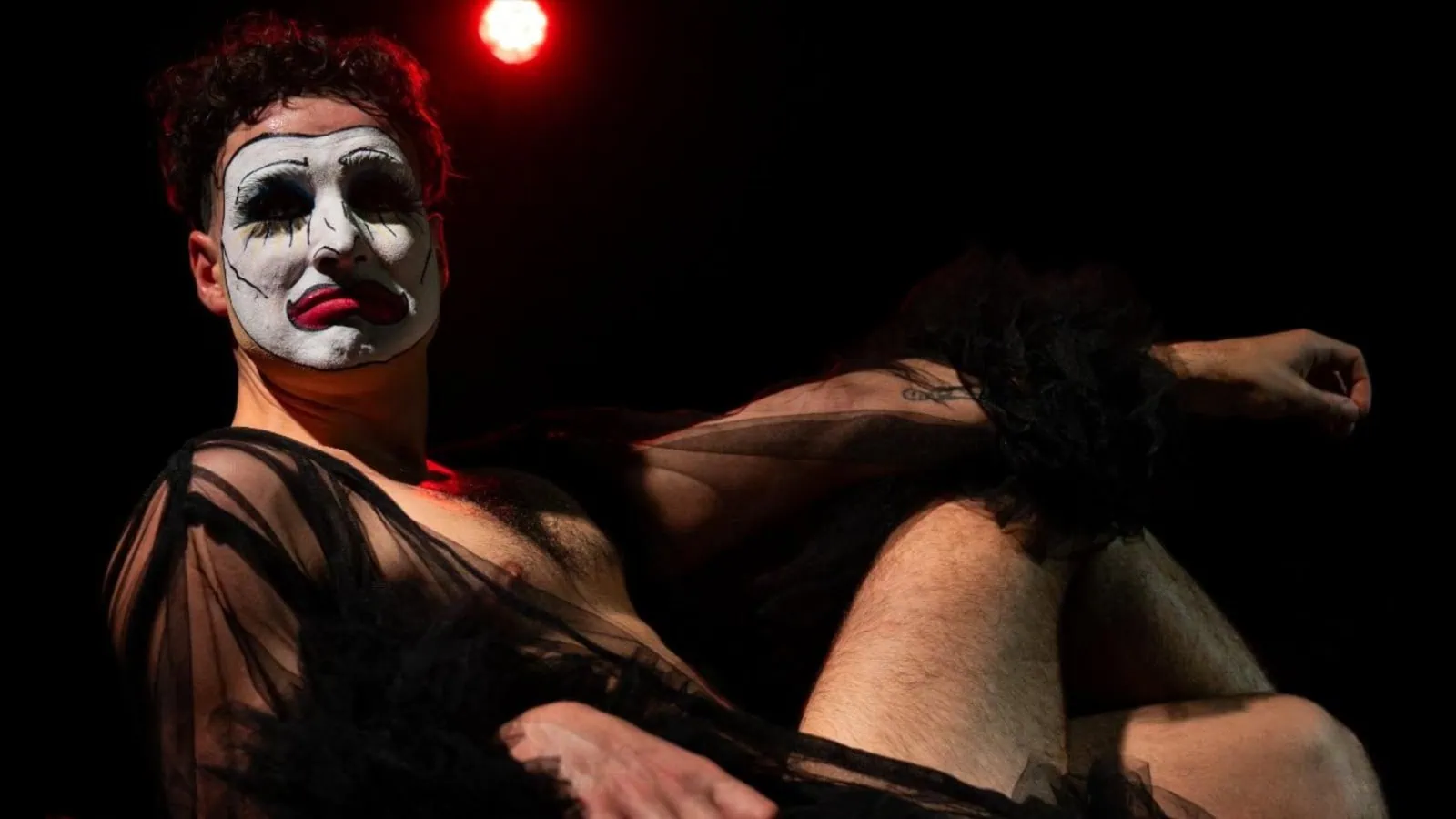
KINDER and its protagonist, Goody, emerged from a humorous (albeit somewhat eye roll-worthy) conceit. What would happen if a drag queen grossly misinterpreted the nature of the ‘reading hour’ they had been booked to perform in? When the show was first staged in 2024, the answer to that question had far more innocent connotations than those posed by the political climate we are touring within today, and the ‘mob of protestors’ who are mentioned in the show to be gathering outside the event Goody was actually booked for (a storytime reading hour at a nearby local library) invokes a far more clear and present danger than it used to.
Als sie mich holten, gab es keinen mehr, der protestieren konnte
Martin Niemöller (1892–1984)
[When they came for me, there was no one left to protest.]
The closing lines of an oft-quoted poem by a Lutheran pastor who opposed the Third Reich read, Als sie mich holten, gab es keinen mehr, der protestieren konnte [When they came for me, there was no one left to protest.] The rights our community fought for and gained over the last decade have left us complacent in our newly-found queer-normativity, and far too many of us have turned away from the pockets of our community still fighting for basic recognition. KINDER begs us to open our arms, invite them back into the fold, and speak out against their persecution. Because if we ask ourselves that very question, who will speak out for me when I am next? – and let’s be honest, it is our persecution next – all we will find is a rapidly waning line of people who will.
KINDER runs from 2 – 7 May, 2026 at The Lantern Theatre, 77 St James’s Street, Brighton BN2 1PA, United Kingdom.
More About Kinder
KINDER riotously explores childhood, gender ideology and the global rise of reactionary politics, revealing how stories and language can be misinterpreted and weaponised.
Chaos ensues when barely digestible (and wholly intolerable) drag-clown Goody Prostate learns the ‘reading’ they’ve been booked for is actually a children’s storytime hour. Forced to improvise a new act for an unimpressed audience of unruly children and bewildered parents, Goody spirals into a chaotic interrogation of nostalgia and the truth of ‘growing up’. Blending monologue, fierce lip-syncing and wild costume changes, KINDER is as silly as it is serious, using drag as both a disguise and a magnifying glass to question memory, storytelling and the experience of coming of age.