I believe that there are a few things we queer people are more than happy to leave to the straights™. Enforcing gender norms is one example. Winter Wonderland in Hyde Park also pops to mind. But I do not believe that science in general, and my own speciality, astronomy, should be exclusive to straight people.
Science, for better or for worse, directly and indirectly, dictates so many aspects of our ways of life. Even before the invention of modern Western science, civilisations across the globe set out to understand the natural world: plants and animals, the weather, the seas, and above all, the sky.
Our ancestors have looked at the sky since the beginning of our species, a few hundred thousand years ago. It was for timekeeping, it was for navigation, and it was to ponder the great questions, maybe hoping to glimpse a fundamental answer or an insight into the future. It doesn’t matter if we want to consider our relationship with the sky as a connection, spiritual or not, to a crucial aspect of the natural world, or in relation to modern astronomy and the quest to understand the universe. In either case, it belongs to all of us. It’s a common heritage.
Over several recent years, we have seen unprecedented attacks on our community and, at the same time, unprecedented attacks on science. These might appear distinct on the surface, but the ideological reasons behind them are one and the same. There are plenty of people in our community who have justified wariness of science and medicine for plenty of historical reasons. Still, time and time again, whenever members of our community have gotten involved in science, we have delivered results. We have seen it in community-led work on vaccine coverage and treatments, as has been the case for Mpox, and we have seen it delivering rigorous rebuttals of misleading anti-trans reviews.
That work is fundamental, but it doesn’t mean that our community’s interest in science is limited to what immediately impacts us. Space has a big impact. The average person relies on access to space about 30 times a day. Weather, telecommunications, navigation, banking, and more go through space. There’s no Grindr without access to space. That access is being curtailed and abused by billionaires who have no love for our community and many others.
Just being ourselves is seen as a political act, something I am often told is the antithesis of science, which should be apolitical. Unfortunately, the idea that science is apolitical is a not-very-believable fairytale, and once again, our own community is proof of how medicine and science can be twisted and weaponised against the marginalised. If our mere existence brings politics into science, we are only illuminating something that is there and unspoken.
The way queer people and other marginalised groups are excluded from these disciplines is the same as always: bullying, harassment, discrimination, and barriers to access. From the inside, we are working hard to fight all of that. It’s a double job: being at the forefront of science, often finding incredible new things, and yet having to at least endure and often fight prejudice.
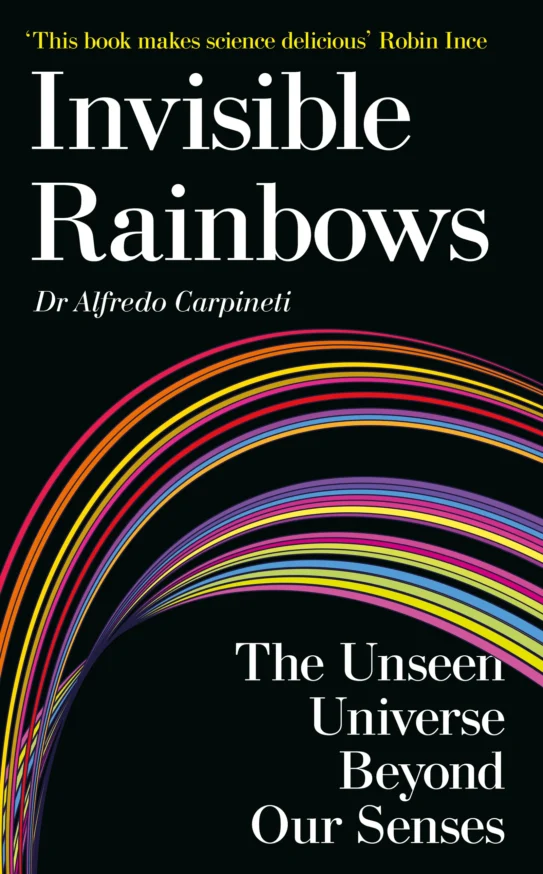
Invisible Rainbows is about the astronomy that we do with the light that we cannot see, through the discovery of about two dozen LGBTQIA+ scientists from around the world. My choice to approach it this way is that often scientists from underrepresented groups are given a chance to talk only in a reflexive way, so identity first, science later. I wanted to make sure that, first and foremost, they are seen as the world-class experts they are, and on top of that, they are also part of the community. This was my way to support a tiny slice of the community, to provide a platform for them. Though there are plenty of ways to help.
Supporting queer people in science can be as simple as finding their videos, following their socials, and reading their science communications. You do not need a doctorate to be curious about planets, black holes, or galaxies. No matter your level of interest, from passing to deep, trust me, there are queer people in science doing something that will intrigue you and amaze you. Look for them!
Invisible Rainbows: The Unseen Universe Beyond Our Senses by Dr Alfredo Carpineti is out NOW (Wilton Square Books, £16.99).