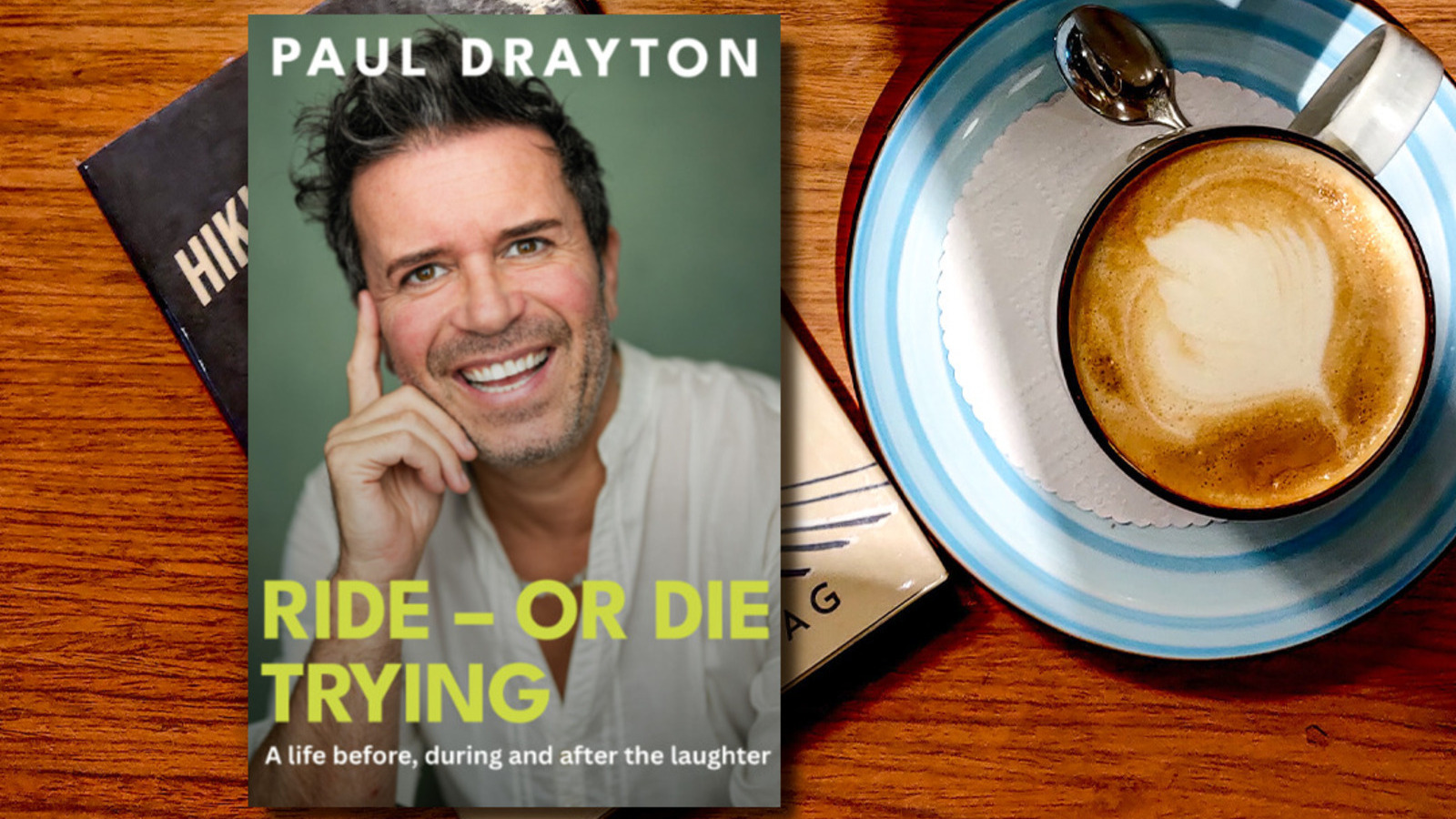
While many readers will recognise Paul Drayton through his marriage to comedian Alan Carr, Ride – Or Die Trying isn’t a celebrity memoir in the traditional sense. It’s a story about family, identity, addiction, recovery, resilience, finding yourself and, above all, the extraordinary people who love us through our darkest moments. Here Paul writes for QX about growing up gay and the journey he took to finally find an authentic version of himself.
By Paul Drayton
There are moments in life that stay with you forever. For me, one of those moments was feeling I had no other choice but to stop living a lie, coming clean and telling my mum I was gay.
I grew up in Sunderland in the 70s and 80s in a very male-dominant household. I had three older brothers, and like most families at the time, there wasn’t much discussion about feelings, identity and definitely not sexuality. If you were upset, you were probably told to make a brew and get on with it.
I spent years figuring out my sexuality on my own and worrying about how my parents would react. My dad was loving but a typical masculine father figure. He showed us how to check the oil on your car, put a shelf up, change a tyre, but never how to straighten your hair. Politically, very Tory in those days. In my head, I never really thought I would ever have to “come out” to them, as in my head I had already come to the conclusion I would have to live my whole life as a son who bore his parents’ grandchildren, etc. I never intended to come out to my mum. It was after being heartbroken from my first breakup from a guy that I just knew I couldn’t hide it anymore and needed her to understand in order for her to fully support me. Looking back, I realise I was carrying far more fear than I needed to.
At first it was a shock with the initial “I’m gay” bit, but then she softened and came to the realisation that she probably had an inkling of it all along and yes, she finally had a child that could give her advice on what to wear. My dad always wanted a girl but stopped when they got to me! Their fourth son, who turned out to be even better than any daughter.
As I’ve grown older, I’ve realised my dad’s tough exterior was exactly that – an exterior. Underneath it was a father who loved his son. It’s funny, isn’t it? We spend years worrying that the world won’t accept us, only to discover that the hardest person to convince was ourselves.
Their acceptance was huge, but it didn’t mean life suddenly became easier.
Growing up gay in the 1980s meant I became very good at reading a room. You learned when to speak, when to stay quiet and, more often than not, how to adapt. I think many LGBTQ+ people of my generation became experts at fitting in. Toning it down, or even butching it up a bit.
I knew there were men, myself included, who genuinely believed they had to ‘do the right thing’- marry a woman, have kids, mow the lawn on a Sunday and quietly suck a bit of c**k on the side. It was as if society had handed us a script and expected us all to stick to it, regardless of whether we’d auditioned for the part or not. I’ve never been one for sticking to a script. My undiagnosed ADHD had something to do with that.
Trust me, I’ve spent a lifetime trying on different versions of myself. Working-class lad. Actor. Husband. Party-goer. Professional people pleaser. Somewhere along the way, I realised I’d become so busy trying to fit in to everybody else’s idea of who I should be that I’d forgotten to ask myself one very important question: ‘What do I actually want?’
That question runs through my memoir, Ride – or Die Trying.
Long before I received my ADHD diagnosis at 50, I spent much of my life wondering why I always felt slightly queer. Was it because I was gay? Was it because I was trying so hard to fit into a world that wasn’t built for people like me? Or was it simply that I hadn’t yet learned to be comfortable in my own skin?
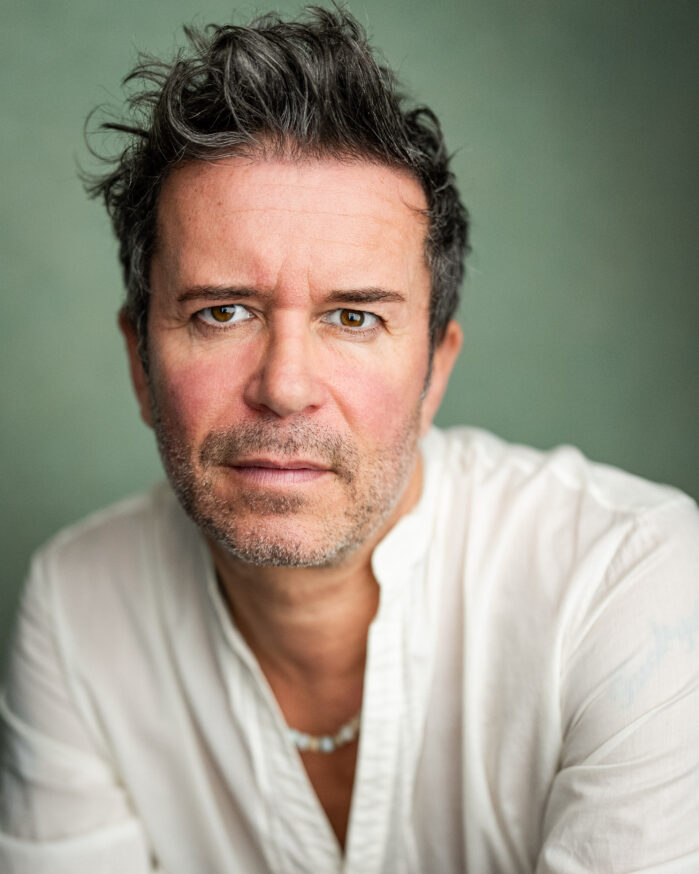
When the diagnosis finally came, it answered questions I’d been carrying for decades. It explained why my mind often felt like it was running at different speeds down many roads. Why the only thing I’d taught myself was to use drugs and alcohol to slow it down and apply the brakes (which obviously worked until it didn’t). Why I could throw myself into things with enormous passion yet struggle with the everyday. Why I felt like a failure when ideas never quite came to fruition and why I’d spent so much energy wondering what was ‘wrong’ with me. But ADHD wasn’t the whole story.
The truth is, I suspect, it was a combination of all of them. Being gay taught me to hide parts of myself. ADHD made me question myself. And years of trying to meet other people’s expectations meant I became very good at performing versions of myself that felt acceptable. Looking back, I don’t think I was searching for a different identity. I was searching for an explanation… and permission to stop pretending.
When I moved to London to pursue acting, I thought I’d finally arrived in the promised land – a city where everyone was fabulous, and nobody cared who you kissed. To be fair, parts of it were exactly that. But even then, the entertainment industry had its own unwritten rules.
In the early 2000s, leading men weren’t openly gay. There was still a feeling that being perceived as gay would limit your opportunities. I experienced that firsthand. I was dropped by my agent after playing my first gay role. Nobody actually said, “It’s because you’re gay,” but let’s just say Sherlock Holmes wouldn’t have struggled to join the dots. Thankfully, things have changed massively since then.
Today, we have openly queer actors leading major productions and global hits like Heated Rivalry and Heartstopper. Young LGBTQ+ people are growing up seeing themselves reflected on screen in ways my generation could never have imagined. Total inclusivity across all aspects of our human characters and makeup. I have never been more excited to step back into an industry that once made me feel I had to be less myself to be accepted and succeed.
Sometimes I wonder what my younger self would make of the world today. The young Northern lad who spent years worrying about what people would think of him would probably be astonished. He certainly wouldn’t believe that one day he would be a married man – to another man – living his best life openly, and then going on to write a memoir about his extraordinary colourful life.
And yet, despite all the progress we’ve made as a society, I’ve learned that acceptance is an inside job.
These days, my life is considerably less glamorous, and I’m more than happy with that. I live my authentic life in the Sussex countryside, spend my mornings feeding sheep and goats, sing in a choir and post to my community on Instagram. Twenty-five-year-old Paul would be horrified. Fifty-year-old Paul thinks it’s perfect.
If there’s one thing I hope readers take from Ride – or Die Trying, it’s this: there is no expiry date on becoming who you were always meant to be.
Whether you’re 15 or 50, coming out, starting over, trying to fit in, or simply finally deciding not to bother. Remember this: your life is a stage and life becomes much easier when you stop auditioning for everyone else’s approval. Surround yourself with people who genuinely love, support and encourage you.
After a lifetime of auditions and never getting the role, I’m delighted to have finally got the part of being my true, authentic self and, more importantly, being comfortable in my own, slightly sagging, leathery skin.
By Paul Drayton, author of Ride – Or Die Trying (Brown Dog Books, Paperback & eBook, June 2026, audiobook August 2026)



![The Rising in London's SE1 is an LGBTQ] bar that has many LGBTQ] social events](https://www.qxmagazine.com/wp-content/uploads/2024/09/imageedit_26_9160770370-728x410.jpg)