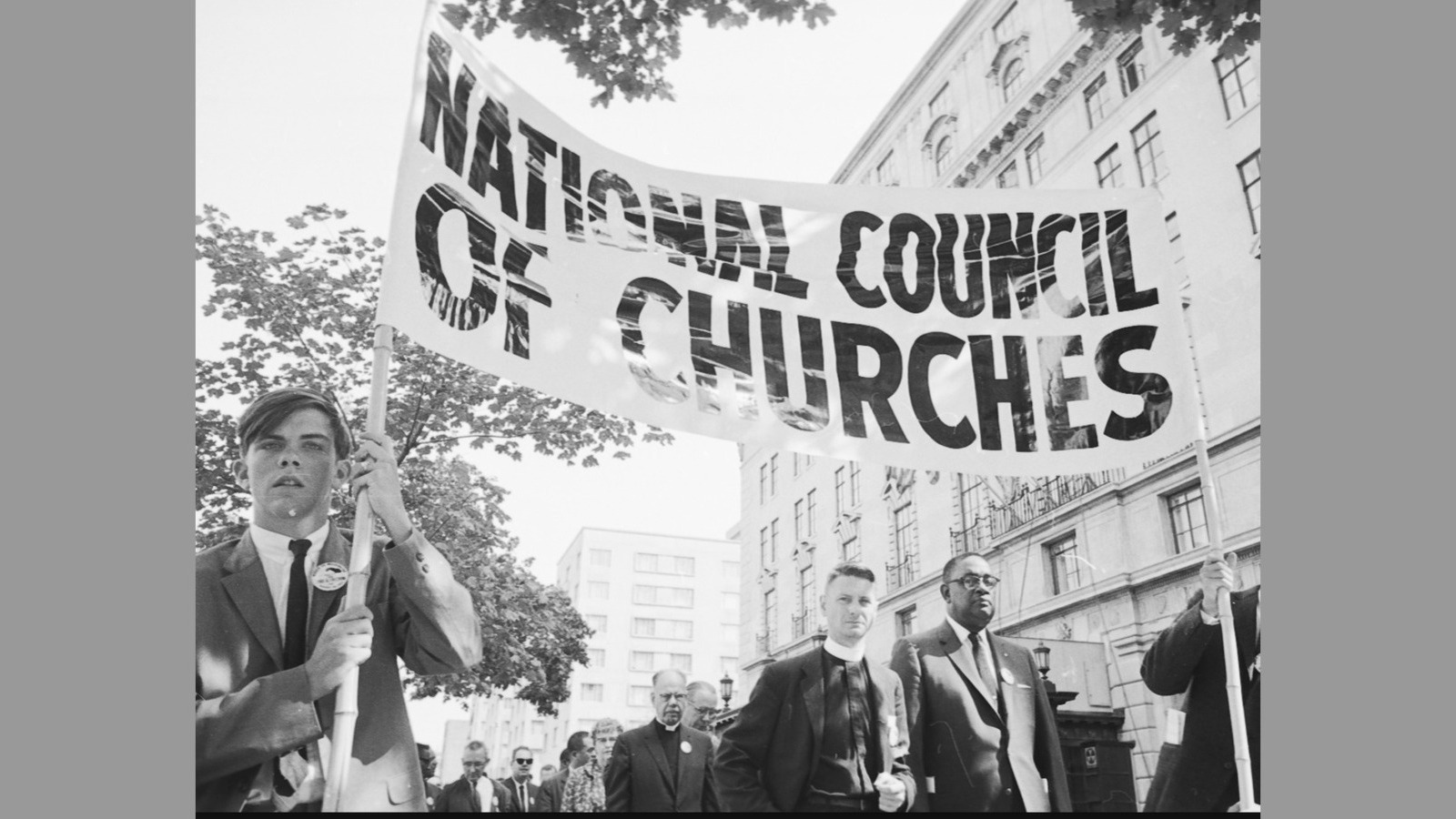
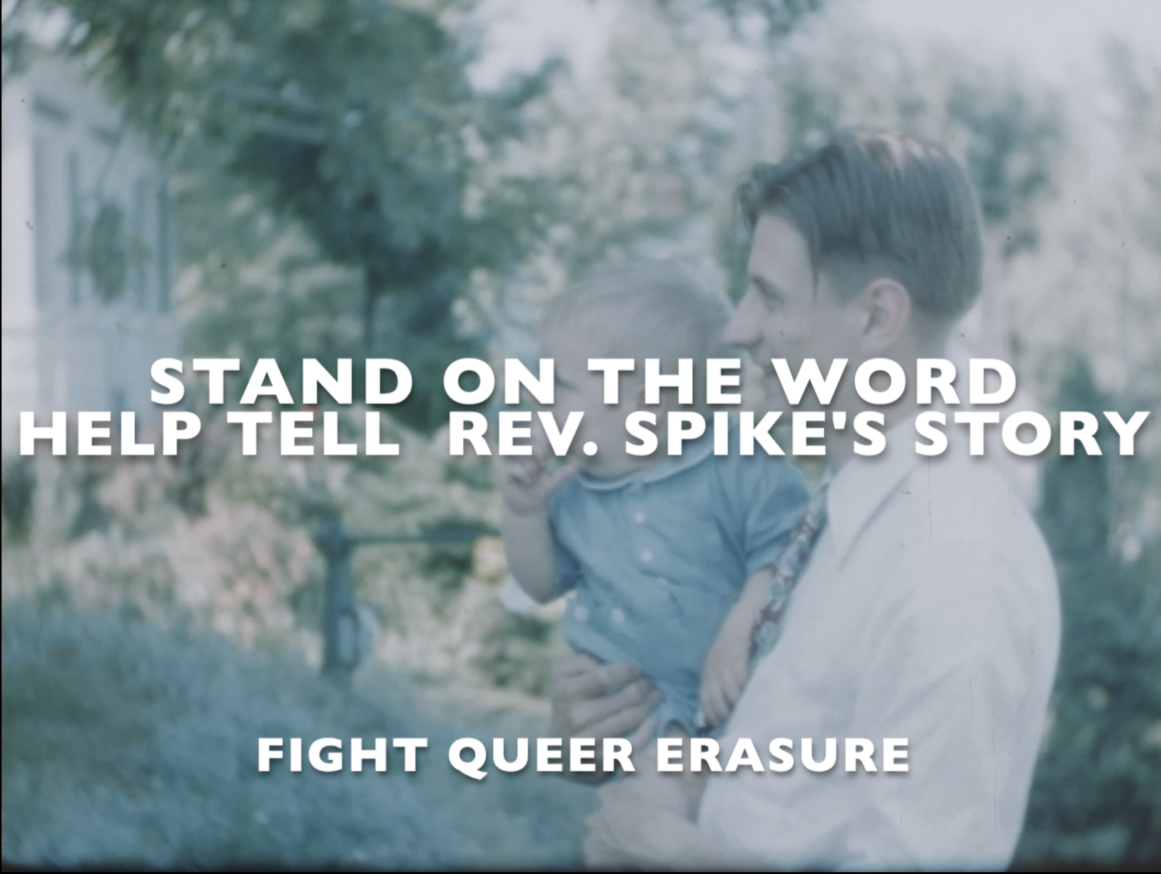
Reverend Robert Warren Spike was a foundational yet often unsung white American civil rights leader and clergyman during the Hoover years. On 17th October, 1966, Reverend Robert Spike was found bludgeoned to death in a campus religious centre in Columbus, Ohio. His murder remains officially unsolved, though church colleagues and historians suspect a political assassination. A lack of fingerprints or other standard evidence at the crime scene led many to suspect a professional hit. Police heavily focused on Reverend Robert Spike’s personal life, using his sexuality to publicly defame him and his legacy and obfuscate the motives behind the crime. They promoted a narrative that his death was the result of a “sexual pickup gone bad”. They highlighted his bisexuality, bar lists, and magazines they labelled pornographic to discredit his civil rights legacy.
QX spoke to Paul Spike about the father he knew and his father’s legacy, and the injustice that a loving son is still fighting 60 years later. And how QX readers can help.
Hello, Paul. It is lovely to meet you. Please tell us about the father you knew and what it was like growing up in the home of such a well-known social activist.
I grew up in Greenwich Village, New York, where my father was the minister of Judson Memorial Church. He was a very good father– very supportive, especially during the tricky adolescent years. From an early age, he encouraged my interest in books and writing.
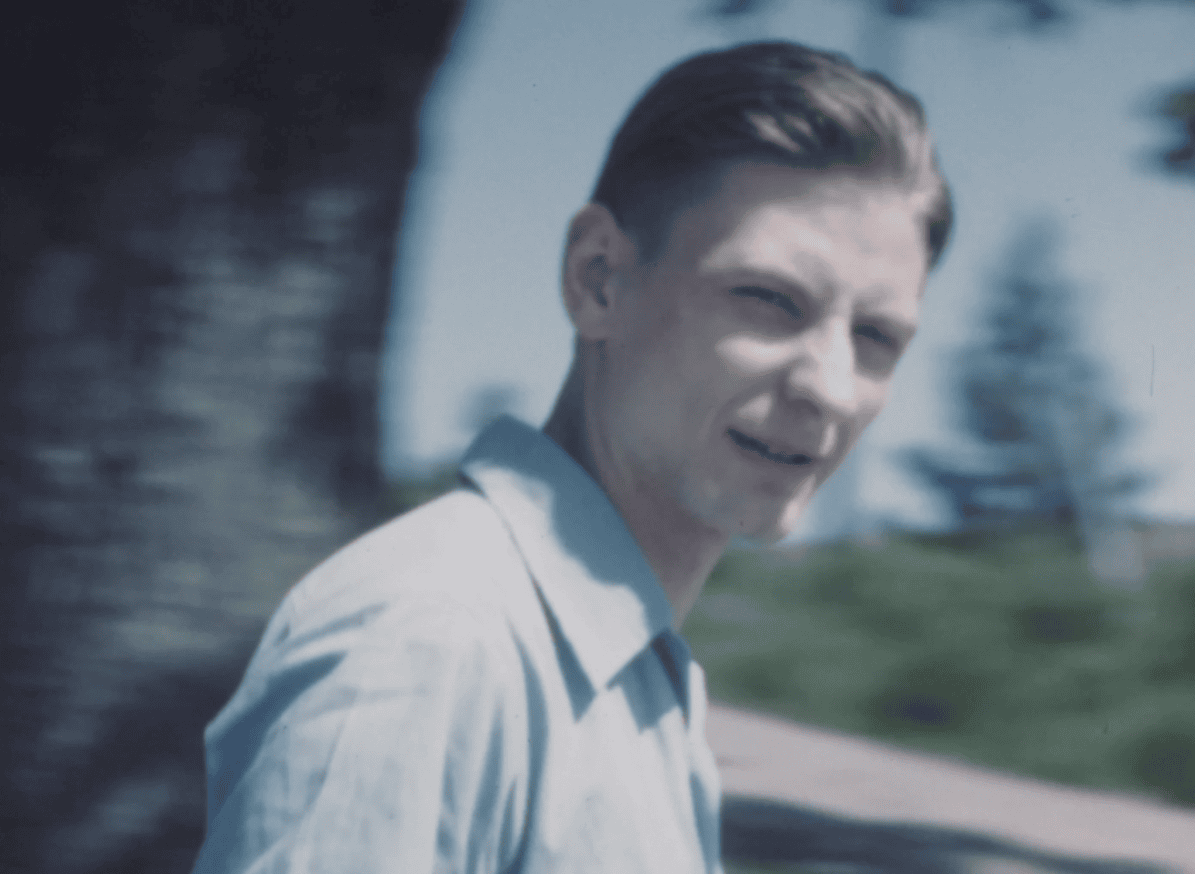
In the Village, he was completely reinventing the church’s relationship to a community which was both bohemian-artistic and working-class Italian. At the same time, he had volunteered to be the Protestant chaplain at Rikers Island youth prison, where the majority of his congregation was Black.
In 1963, he, along with other religious leaders, met with James Baldwin and was inspired to throw himself completely into the movement for Black American civil rights. Within a week, the National Council of Churches’ Commission on Religion & Race was founded with him at the helm. As such, he organised 40,000 white Americans to join the March on Washington in August 1963. He brought me along on the March as a 16-year-old student. In the next years, while I was away at school, he was organising the American church to take an activist part in the Movement – in Mississippi, Georgia, Alabama, Chicago and Washington DC.
The civil rights struggle dominated the news broadcasts in those days but he actually tried to keep a relatively low profile as he directed the churches into taking an active role in changing America’s racist society. He had a profound impact on me, but more importantly, on American society.
You were 19 years old when your father was murdered. He was then publicly outed as homosexual through a police-led smear campaign. Is that how you found out that your father was queer and how did the smear campaign affect you?
Actually, I had learned about my father’s sexuality a year before his murder. And I know that my mother had known for many years. The way that I learned was unfortunate. A member of his staff had, while drunk, made a clumsy attempt to seduce me one night after I met him by chance in a campus bar near Columbia University, where I was a freshman. “You must be queer, Paul, because your father is,” he told me. I was stunned because my father had been very successful at keeping his sexuality closeted – as was the norm in 1960s America long before the Supreme Court finally ruled in 2003 that it’s unconstitutional to criminally prosecute consensual sexual relations between two adult men.
In the 1960s, it was illegal to be gay in 49 of the 50 states. Gay men were frequently targeted and arrested by the vice squad. The FBI ran a major “Lavender Scare” campaign of fear and intimidation, causing people simply suspected of being LGBTQ to lose their jobs. Homosexuality was classified as a “sociopathic personality disturbance” by the American Psychiatric Association until 1973.
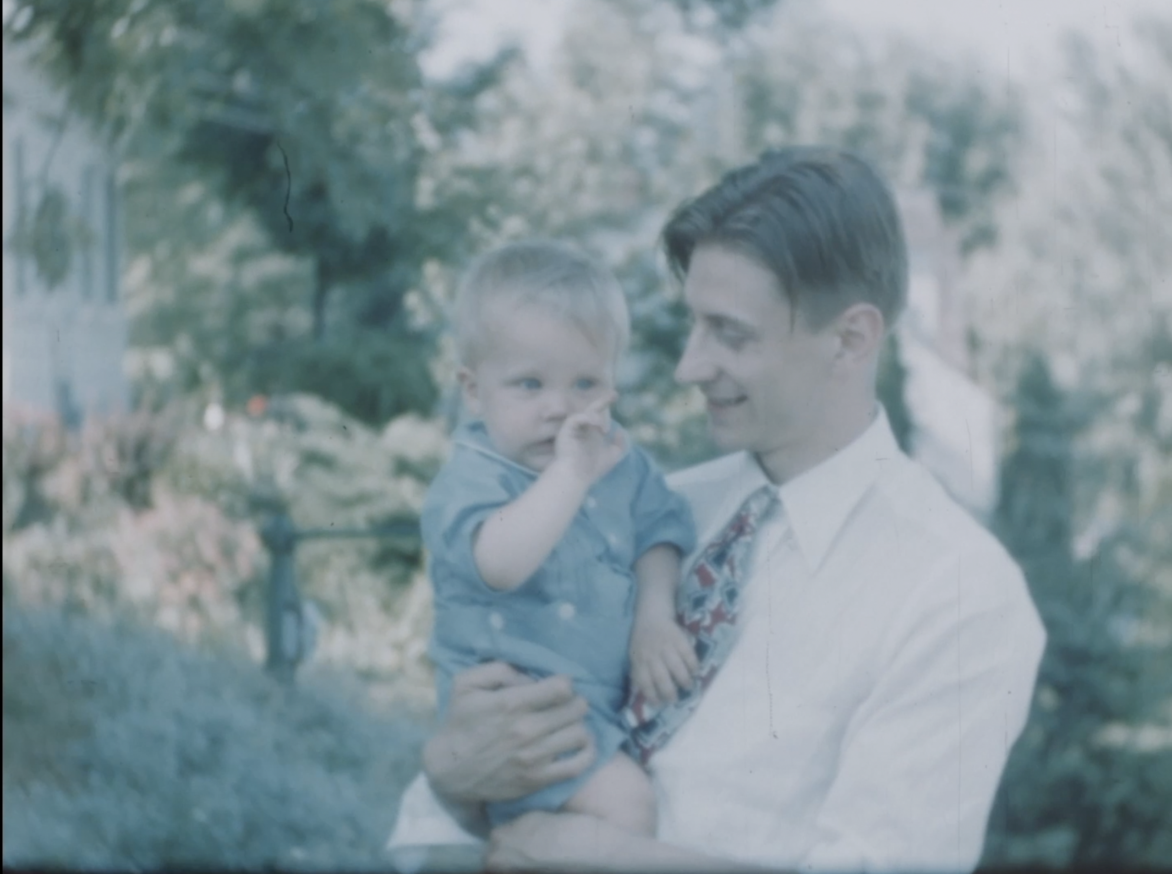
When I was told that my father was a queer, I immediately contacted him. He flew from Chicago to meet with me in NYC. I saw how upset and anxious he was, but he was completely honest with me. I didn’t want details about his sex life – I just wanted our strong father-son relationship to stay intact. I saw that, in this instance, my father needed my unconditional love and support more than I needed his. He had taught me how to love. So when he was killed a year later, the nasty smears that were launched against him did not shake my confidence in his life and truth for even a second.
The very last time I saw him alive, my father told me a top government official wanted him to stop helping register Black voters in Mississippi and threatened, “The FBI knows about you, Dr Spike”. My dad told him that he didn’t “give a damn what they say about me”. Three weeks later, he was murdered. Even in 1966 — three years before Stonewall – he was not going to let anyone blackmail him with his sexuality. I am immensely proud of his courage.
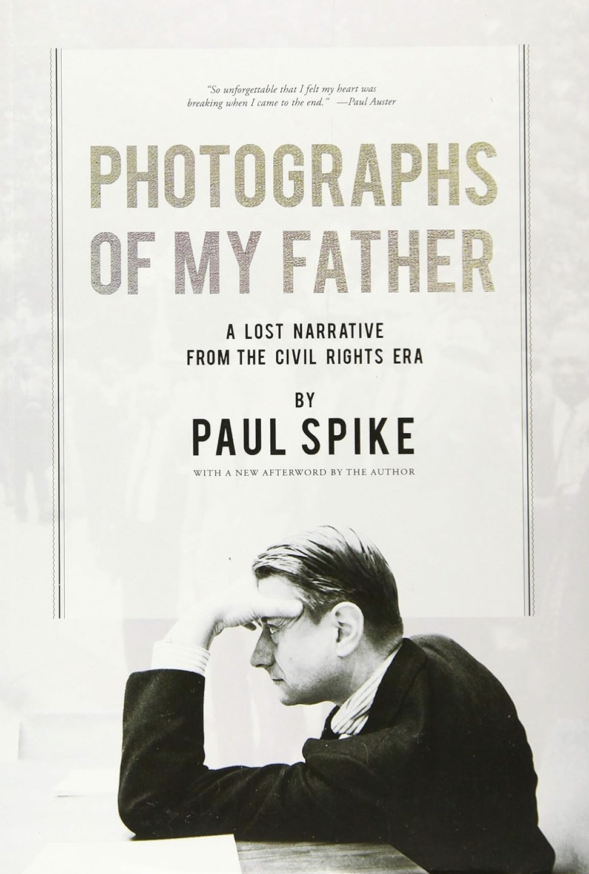
You wrote Photographs of My Father when you were 23. Now you are 78 and working to fund a film about your father. Please tell us about this project, its aims and in particular, the story’s relevance to what is happening today.
For the past two years, my fellow producer Mary Beer and I have reopened the investigation into my father’s unsolved murder. Really, it is the first serious investigation because, as I suspected at the time, the local police never conducted a proper murder inquiry, found no actual evidence, failed to interview the most important witnesses, but immediately portrayed his death as a random “perverted” sex killing. They gave phoney information to the local newspapers and spread false rumours about non-existent crime-scene evidence. Why they did this is as yet a mystery to me, but it is also unsurprising to me. I strongly believe his death was a political assassination and the smear campaign that followed it was, as was common in those J Edgar Hoover years, carefully orchestrated to undermine the Freedom Revolution itself. We have found some extremely compelling evidence that has never been revealed before, but there’s a lot more ground to cover while witnesses are still alive.
The fact that my father’s homosexuality was successfully used to erase his important achievements from history is a fact that has great relevance today. I want the world to understand how this vicious and immoral tactic was used in the past and is sadly coming back today – just as much as I want my father’s historical legacy to be remembered. The fight for civil rights is very much not over. We are seeing increased violence and terror inflicted on the whole LGBTQ community, along with other groups of people, through the same dehumanisation that was used in the 1960s. We must always challenge any narrative that equates being queer with being ‘immoral’ or ‘shameful’.
Part of this project is a quest to find out who killed and who smeared my father and to expose the injustices that erased his legacy – a legacy Martin Luther King himself said we should never forget. At the same time, there are inspiring lessons from my father’s life – through the books he wrote, the sermons he preached, the organising he led and the tactics he pioneered – that can serve as a game plan for asserting our rights today in the face of growing prejudice and violence.
By the way, the 2003 Supreme Court decision, Lawrence v. Texas, only won 6 to 3, with Justice Clarence Thomas voting against it, and he’s still on the bench along with new, far more homophobic and transphobic justices than those who were part of the 2003 decision. We can take nothing for granted.
How can our readers help make this project succeed?
Well, they can come and party ’til the late hours with me at The Eagle fundraiser on Friday, 24 July, with some great DJs that the brilliant Handsome House Party has produced!!! All the entrance fees will go to our GoFundMe campaign, which is meant to enable us to finish making a concept-affirming film trailer, which we need to convince major funders to get behind us and finance a feature documentary film that will advance the causes my father gave his life for and for which all of us must live today: freedom, equality and justice. If they can’t make it to the Eagle, they can donate here:
I also hope your readers will come for the Q&A at 9 pm that I’ll be doing before the dancing gets going. I’ll have some limited-edition copies of my book to sign for sale so they can learn more about the remarkable life of Robert Spike. All those proceeds will also be used to fight queer erasure.
Stand On The Word: A Fundraiser is on 24th July 2026 (9pm – 4am) Q&A followed by party at Eagle London, 349 Kennington Lane, London SE11 5QY, United Kingdom.
Music will follow from house legend Terry Farley (Boy’s Own) and Handsome DJs Terry Trexstasy & Fitzy.
Tickets: £8
“He was one of those rare individuals who sought at every point to make religion relevant to the social issues of our time. He lifted religion from the stagnant arena of pious irrelevancies and sanctimonious trivialities. His brilliant and dedicated work will be an inspiration to generals yet unborn. We will always remember his unswerving devotion to the legitimate aspirations of oppressed people for freedom and human dignity. It was my personal pleasure and sacred privilege to work closely with him in various undertakings.”
Martin Luther King Jr