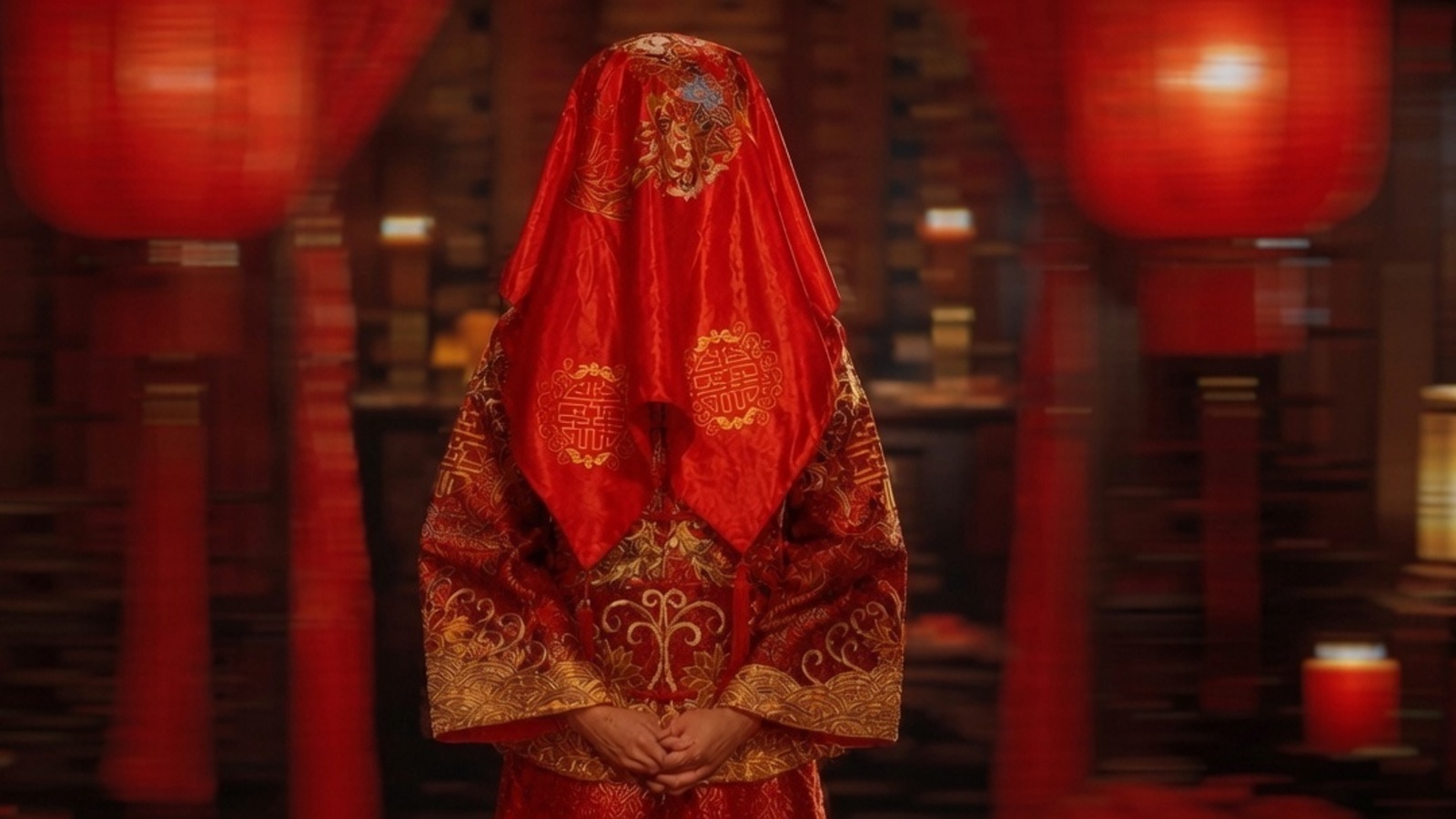
Bury Me Before You Marry Me begins with the tradition of ghost marriage: a ritual found in parts of Chinese and Asian culture in which a deceased unmarried person may be symbolically married, so that they are not alone in the afterlife. To look at this practice only as something strange or frightening would be too simple. At its root, it can come from love, from a family’s grief, their longing, and their desperate wish to continue caring for someone they have lost.
When someone dies, especially before the life they were “supposed” to have has fully begun, the people left behind often search for meaning. They want to believe there is still somewhere for their love to go. They want to imagine an afterlife where their child, sibling or relative is not lonely, not unfinished, not abandoned. In that sense, the ghost wedding is not only about death. It is about the human refusal to let go.
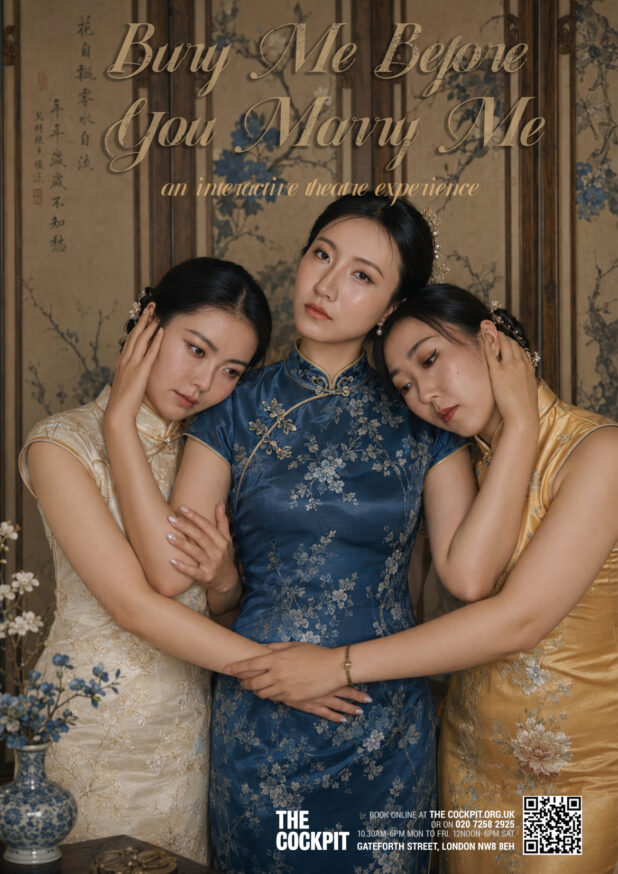
Our show is interested in that tenderness, as much as it is interested in the horror.
Set within a queer Chinese family in London, Bury Me Before You Marry Me asks what happens when love, grief, duty and control become entangled. The family at the centre of the story is not simply cruel. They are wounded. They are frightened. They are trying, in their own way, to protect someone they love, but the question is: protect them from what? Loneliness? Shame? Social judgement? Or from a truth the family cannot bear to face?
This is where the tradition becomes complicated. Love can be genuine and still cause harm. A family can act from grief and still make choices that silence the person they claim to honour. A ritual can be born from care, but also become a way of controlling identity, rewriting memory, or forcing the living and the dead into roles they never chose.
For queer people, this tension can feel painfully familiar. Many of us know what it means to be loved conditionally: loved as a child, but not fully accepted as ourselves; protected, but also corrected; kept close, but also hidden. In many families, especially within diasporic contexts, love is rarely simple. It can come wrapped in sacrifice, fear, reputation, survival, and expectation. Sometimes the very people who love us most are also the people who find it hardest to see us clearly.
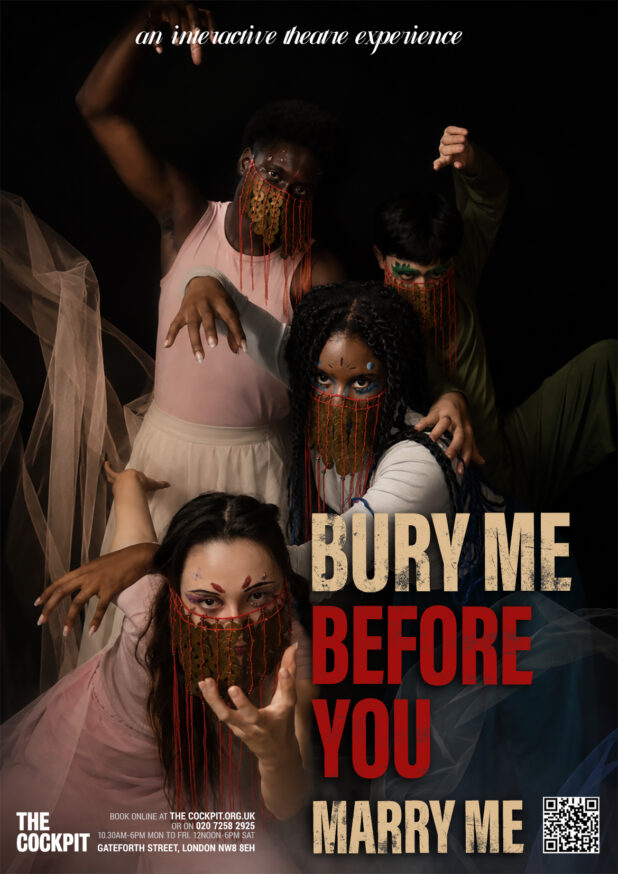
That is the emotional territory of the play. The ghost wedding becomes a lens through which we examine what “acceptance” really means. Is acceptance still acceptance if it arrives only after someone has disappeared? Can a family honour a person while refusing to acknowledge who they truly were? And when grief becomes unbearable, who pays the price for the family’s need for peace?
The piece is also interactive. The audience are not invited to sit back as neutral observers. They enter a wedding, a ritual, and a family crisis. At key moments, they are asked to intervene, to choose, to witness, and to become implicated in what unfolds. This mattersbecause the play is not about one monstrous decision made by one monstrous family. It is about the smaller silences and compromises through which harm becomes possible: politeness, discomfort, denial, curiosity, obedience, love.
Written and directed by Susu, a Chinese gay artist, and created by a predominantly LGBTQ+ team, Bury Me Before You Marry Me comes from inside these contradictions. It is not trying to condemn culture from the outside, nor to romanticise tradition uncritically. Instead, it asks us to sit with the discomfort of something that can be both loving and violent, tender and terrifying, intimate and political.
For QX readers, I think the show speaks to a question far beyond the ritual itself: how do we love the people we have lost without trapping them inside the version of them we needed? And how do we love the people still living without asking them to disappear?
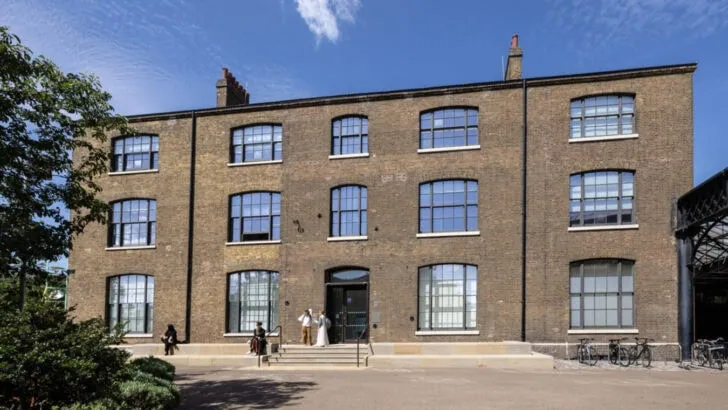
Bury Me Before You Marry Me runs at The Cockpit, London, from 29 July to 1 August. It is a ghost wedding, a family gathering, a dark comedy, a ritual of grief, and a question that refuses to stay buried.








![The Rising in London's SE1 is an LGBTQ] bar that has many LGBTQ] social events](https://www.qxmagazine.com/wp-content/uploads/2024/09/imageedit_26_9160770370-728x410.jpg)