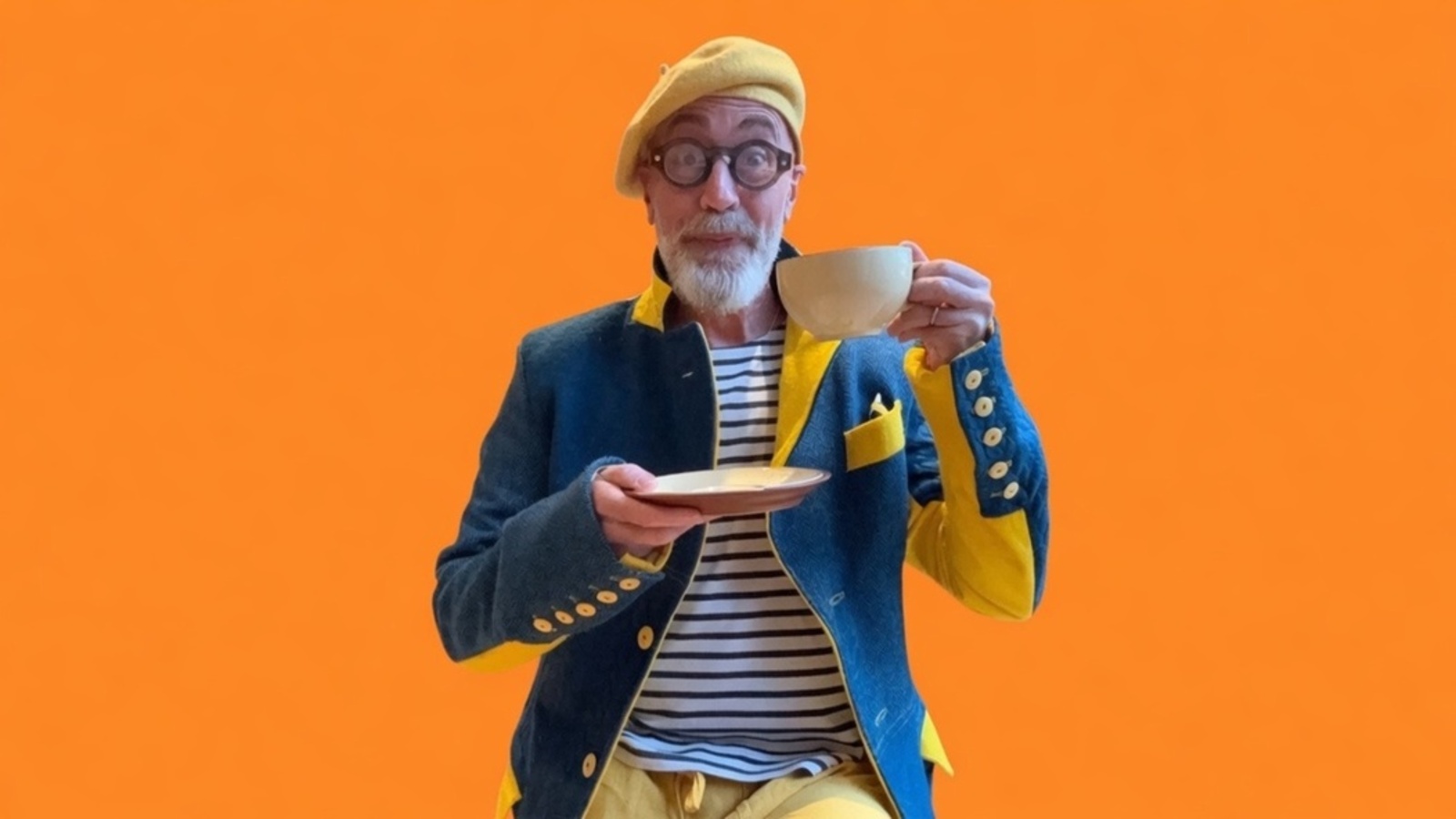
“I have to chew gum from quite early in the day in order to get my mouth around Victoria’s songs,” he says, sitting in his Crystal Palace garden, surrounded by beautiful roses. “I don’t know whether it does any good, but I know how much my jaw is needed for the show. If I didn’t do it now, I’d tie myself in knots.”
Before the gum comes the shower, where Paulus performs the first of three vocal warm-ups. On his Dictaphone, he can hear the voice of his director, Sarah-Louise Young, guiding him through the exercises. “So Sarah-Louise gets in the shower with me,” he says, cheerfully. “And we do 12 minutes of humming.”
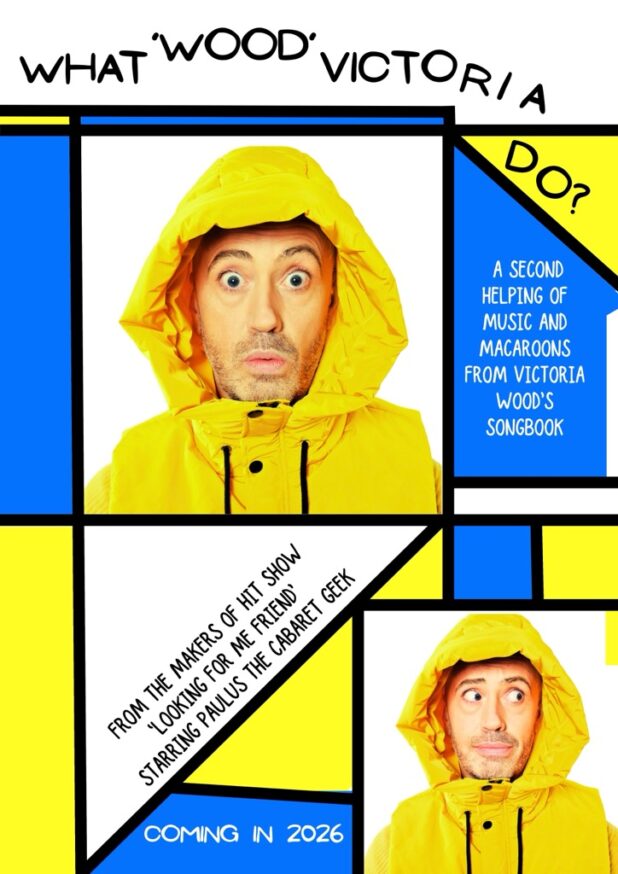
His new show, What Wood Victoria Do? follows the huge success of Looking for Me Friend: The Music of Victoria Wood. But this time, Paulus is alone on stage. No pianist. No safety net. Just one man, a spotlight, backing tracks, and the glorious, complicated emotional inheritance of Victoria Wood.
“It’s about my mum and me,” he says. “It’s about the emotions we adopt from our parents, the emotions we learn from our upbringing, and what happens when we try to suppress them.”
His mother is woven through the show. On stage, Paulus wears a green ribbon around his wrist — a gift from Sarah-Louise on the opening night of his Edinburgh run. Green was his mother’s favourite colour. She wore green ribbons in her hair as a child in an orphanage.
“That matters a lot,” he says. “The shows are very much for and about my mum.”
Victoria Wood entered his life in 1985, when Paulus was ten, watching As Seen on TV with his mother and sister. What struck him, even then, was not just the jokes but the look: the boxy jackets, the shirts, the leather ties, the spiky hair.
“If someone turned up on telly now looking like that, we’d probably assume they were queer, or somehow other,” he says. “But I think the statement was simply: I’ll wear what I damn well please, thank you.”
That mattered to a boy who “didn’t fit in in most traditional places”.
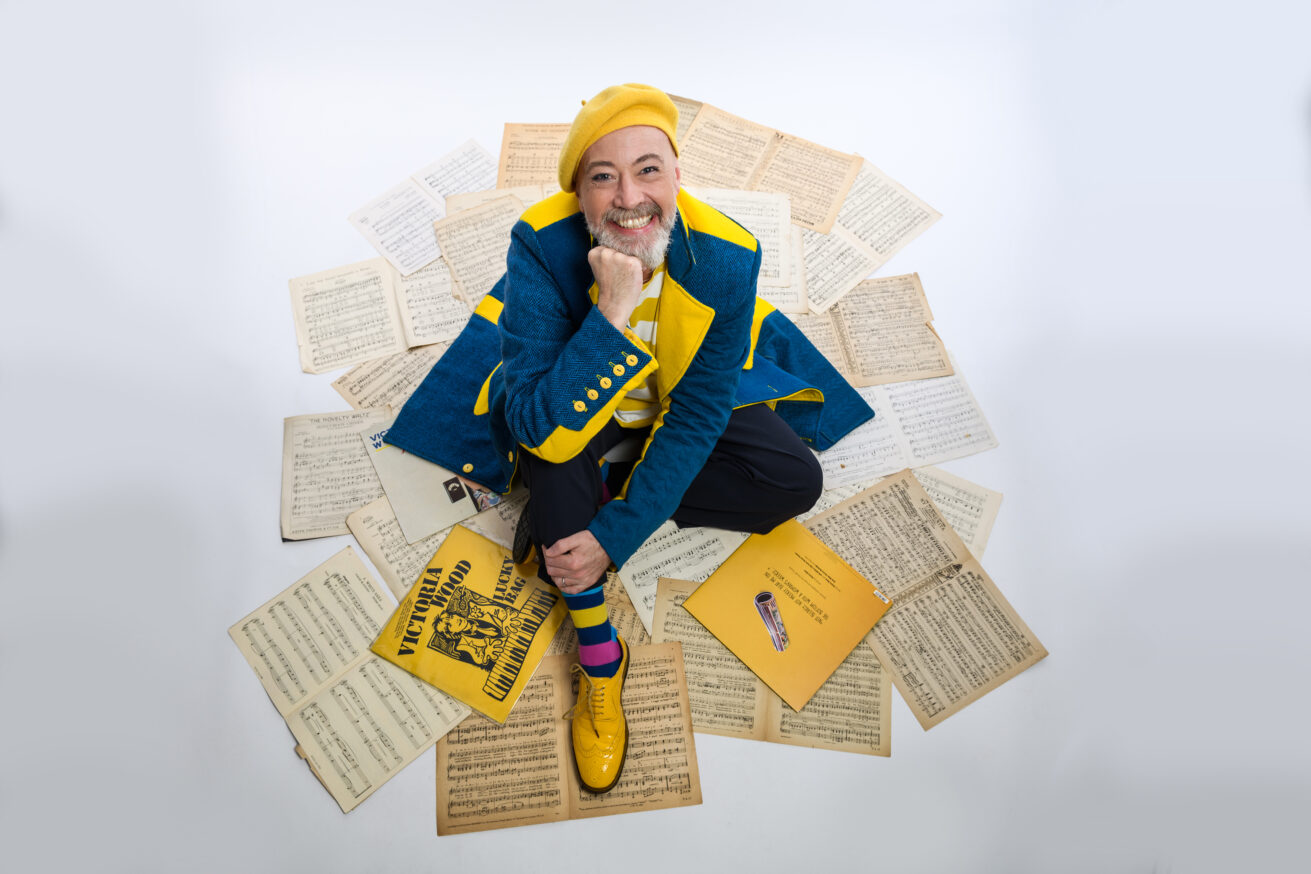
Paulus is fascinated by the scale of Wood’s achievement. She has around 400 songs registered with PRS, he says, and “not a single solitary co-writer. Not one word, not one lyric. It’s all her.”
He bristles at the idea that Victoria Wood was simply a northern comic, or a women’s comic. “She was an equal opportunities comedian,” he says. “She skewered everybody.” Julie Walters, he notes, once said Wood’s great gift was puncturing “the pomposity of daily life”. Paulus agrees. “That’s got nothing to do with whether you’re in Macclesfield or Maidstone.”
A performance day, however, is not all glamour and genius. Much of it is logistics. Since most of his shows are one-nighters, Paulus can spend six or seven hours travelling to perform for 100 people, then leave again immediately afterwards. He learned to drive at 49 because public transport had become too unreliable.
“It’s like starting a new job every day,” he says. “You don’t know where the toilet is, where to park, who’s called Frank, or whether Frank needs bribing with a Mars bar.”
Venues range from the Lowry to village halls. Dressing rooms may be luxurious, chaotic, or non-existent. Paulus checks websites and Google Images before arriving, just to prepare himself. “You have to sort out your ego before you even get there.”
That ability to adapt is part of cabaret’s power. “Cabaret means small room,” he says. “There’s no fourth wall. I can see every single one of you.”
He has learned, over the years, to be kinder to himself and to audiences. Once, in Birmingham, a man answered his phone mid-show. The horror. Except the man was saying: “Mate, I’m at the best thing ever! Have you ever been to a cabaret before? Listen to this!”
Paulus laughs about it now. “Whenever you think someone’s not paying attention, maybe assume they’re texting: ‘You’ve got to buy a ticket to this.’ Why not assume that?”
His first audiences were not in theatres at all, but at the Bright and Happy Club in a village hall in Kent, where his mother served teas and coffees to older ladies. As a child, Paulus would sing for them with his friend Sarah Palmer. They called themselves Strawberry Entertainments.
“I’m still performing in village halls to old ladies, selling tea towels to boost my income,” he says.
For all the jokes, there is something deeply serious beneath Paulus’s work. He talks about queer childhood, school bullying, family, religion, politics, and the long process of understanding what shaped him. Born in 1975, he recognises the trauma many gay men of his generation carry. But the show is not therapy. It is theatre. And Victoria Wood is still, gloriously, funny.
“Her choice of words is so funny,” he says. “She chooses bouncy words. Happy, jolly words. Even hearing her say something like ‘trampoline’ — that’s not a joke. It’s just a word. But it’s Vic.”
When audiences meet Paulus after the show, they often tell him he has brought Wood back into the room.
“That means a tremendous amount,” he says. “It’s what I’m attempting. To almost conjure her back to life.”
So, what would he like to be remembered for when the curtain finally comes down?
“I think that I did it with some integrity,” he says.
He thinks often about Wood’s respect for her audience: the knowledge that people had spent their hard-earned money on a ticket, and that comedy deserved craft, rigour and care.
“She could have made dinnerladies without rewriting it five times,” he says. “But we wouldn’t still be watching it 30 years later. Her dedication was to making it quality. Not just, ‘It’s a laugh, put on a funny hat.’ That’s disrespectful.”
For Paulus, What Wood Victoria Do? is a continuation of that respect. A love letter, yes. A fan’s tribute, certainly. But also, something more intimate: a man alone in a spotlight, asking what we inherit, what we suppress, and what we might yet unlearn.
And before he steps into that spotlight?
Three vocal warm-ups. Chewing gum. Green ribbon.
Then Victoria.
The What Wood Victoria Do? tour commences on Friday 17th July 2026 and runs until Sunday 18th April 2027: written and performed by Paulus the Cabaret Geek.
London Shows 23rd – 25th July 2026 and 27th September 2026.
Words: Justin David is the author of Tales of the Suburbs, Kissing the Lizard, and The Pharmacist. He is also the publisher at www.Inkandescent.co.uk
Photography: Steve Ullathorne